Trademark Risks in Puzzle Book Titles (What to Avoid)
Trademark risks in puzzle book titles on Amazon KDP: unsafe vs safe examples, Brand Registry patterns, and a pre-publish checklist with the RodBooks trademark checker.
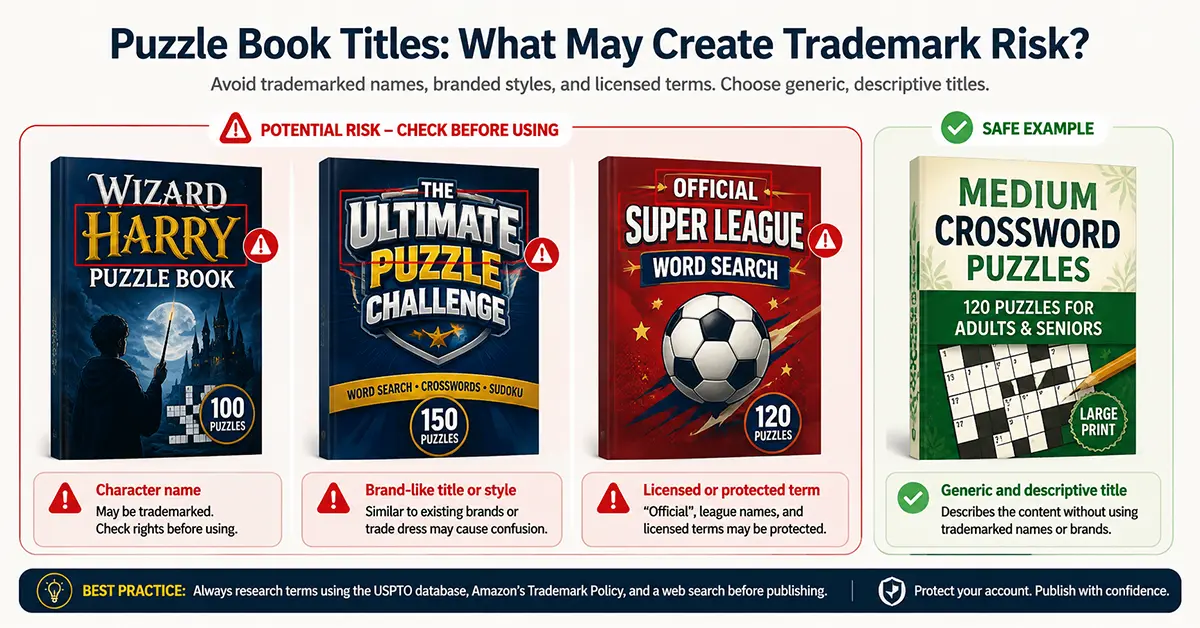
Trademark risks in puzzle book titles are one of the fastest ways Amazon KDP removes a listing. This guide shows the unsafe patterns publishers hit most often, safer rewrites, and how to screen terms before you spend on cover art.
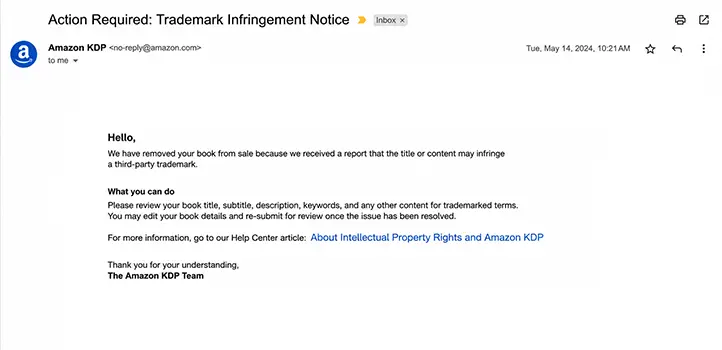
Amazon removes listings. Not slowly, not with warnings, sometimes overnight, with no opportunity to edit before removal. One of the most common causes for KDP listing removal is inadvertent trademark infringement: a title, author name, series name, or description that uses a term protected by someone else's trademark.
For puzzle book publishers, the risk is both real and specific. The puzzle niche is full of tempting title phrases that feel generic ("SUDOKU MASTER," "CROSSWORD PRO," beloved character crosswords) but are actually registered trademarks. An account with multiple trademark strikes risks permanent suspension.
This guide covers: how trademarks work on Amazon, the most common infringement patterns in puzzle books, how to check a term before publishing, safe naming conventions, and what to do if your listing is flagged.
See also: title formulas after clearance, copyright page vs trademark check, and launching a puzzle book series.
How Trademarks Work on Amazon
Amazon's Brand Registry program allows trademark holders to register their marks and actively monitor Amazon listings for infringement. When a brand flags your listing, Amazon can:
- Remove the listing immediately without notice
- Issue a policy warning to your account
- With repeated violations, suspend or permanently close your seller/KDP account
Amazon's standard is more aggressive than strict legal trademark enforcement. You do not have to be "causing consumer confusion" (the legal test for infringement). Amazon's content teams will act on complaints from registered brands even in cases where a legal court might not find infringement.
Three types of trademark that matter for KDP publishers:
1. Word marks: A specific word or phrase registered as a trademark. Example: a publishing company that trademarked "SUDOKU MASTER" for book products.
2. Character names and fictional properties: Characters from books, movies, TV, or games are often trademarked AND separately protected by copyright. A "Harry Potter crossword book" without license is both a trademark issue and a copyright issue.
3. Event and competition names: Major crossword or sudoku competition names, newspaper puzzle series names, and well-known puzzle brands may be trademarked.
Unsafe vs safe title examples (copy these patterns)
Use this table as a pattern library. The left column shows the kind of claim that gets publishers into trouble. The right column shows how to keep the buyer promise without naming protected IP. These are educational examples. Always verify distinctive words before publish.
| Risky title pattern | Safer rewrite | Why |
|---|---|---|
[Franchise] Word Search for Fans | Fantasy Adventure Word Search for Adults | Franchise names are licensed IP, not themes |
[Celebrity] Crossword Puzzle Book | Large Print Crossword Puzzle Book for Adults | Implies endorsement / right of publicity risk |
[Sports team] Sudoku Challenge | Hard Sudoku Puzzle Book for Adults | Team names and logos are protected marks |
NYT-Style Daily Crossword Book | American-Style 15x15 Crossword Puzzle Book | Publication brands and style-of claims get flagged |
[Puzzle brand] Official Sudoku | Progressive Difficulty 9x9 Sudoku Book | Named puzzle companies and official claims |
[Kids show] Maze Activity Book | Easy Maze Activity Book for Kids Ages 4-8 | Characters and show titles need licenses |
Disney Inspired Magical Word Search | Magical Fairy Tale Word Search for Kids | Inspired-by still signals a protected brand |
[University] Campus Crossword | College Student Crossword Puzzle Book | Institution names can be trademarked for merchandise |
The Most Common Trademark Traps for Puzzle Book Publishers
Pattern 1: Named Puzzle Brands
Some puzzle book series and styles have been trademarked. Common examples in the puzzle space:
- "NIKOLI", the Japanese puzzle company that popularized sudoku
- Branded sudoku and crossword styles with specific competition names
- Named difficulty systems associated with specific publishers
Safe alternative: Describe your puzzle style with generic terms. "American-style crossword" not "[named competition] style." "Progressive difficulty 9x9 sudoku" not "[brand]-style sudoku."
Pattern 2: Character and IP Crosswords
"Game of Thrones crossword," "Disney word search," "Marvel superhero maze", any licensed intellectual property is protected by both trademark and copyright. This applies to:
- Book characters (Harry Potter, Percy Jackson, any named fictional character)
- Movie and TV franchises (Star Wars, Marvel, DC, Disney properties)
- Sports teams and their names/logos
- Music artists and band names
- Video game titles and characters
Safe alternative: Use thematic categories instead of IP names. "Fantasy adventure crossword" (not "[specific fantasy series] crossword"). "Superhero-themed maze book" (not "[specific hero name] maze").
Pattern 3: "NYT-Style" or Publication-Style Claims
The phrase "New York Times style crossword" and similar claims referencing specific newspapers' puzzle brands can trigger trademark issues. Some publishers also use newspaper column names or competition names.
Safe alternative: Use generic style descriptors. "American-style" or "Themed-clue style" crosswords. "Classic 15x15 grid format", not referencing any specific publication.
Pattern 4: Famous People and Living Celebrities
Book titles that appear to be authored by or officially associated with a celebrity when they are not can trigger right-of-publicity claims. "Trump Crossword Puzzles," "Taylor Swift Word Search", these imply an official connection that doesn't exist.
Safe alternative: Avoid all celebrity names in titles, author names, and cover copy unless you have an explicit license.
Pattern 5: Geographic and Event Marks
Some geographic terms, event names, and institution names are trademarked for publishing purposes. Regional sports team names, major cultural events, and certain destination names have trademark protections that can affect puzzle book titles.
Safe alternative: Research any geographic or event name that is a proper noun rather than a descriptive term.
How to Check a Term Before Publishing
Before committing to a title, series name, or cover element, run it through these checks:
Step 1: USPTO Trademark Search (US market) Go to tmsearch.uspto.gov and search the term. Filter to "Live" status marks and "Books" or "IC 016" (paper goods, printed matter) in the goods/services class. If the term appears as a live registered mark in class 016, do not use it.
Step 2: EUIPO Search (EU/UK market) For titles targeting Amazon.co.uk or Amazon European marketplaces, check the European Union Intellectual Property Office database at euipo.europa.eu.
Step 3: Amazon Brand Registry Search Amazon's brand search is not publicly accessible, but you can check indirectly: search the term on Amazon. If existing products have a "Brand: [Name]" field showing the exact term and appear well-established, there may be a registered brand. This is not definitive but is a quick signal.
Step 4: Google Search A simple Google search of your proposed title + "trademark" often surfaces news, legal databases, or domain registrations that indicate trademark activity. Also search: "[your proposed title]" site:amazon.com to see if any existing book already uses the exact phrase with an established brand.
Step 5: RodBooks Trademark Checker RodBooks Trademark Checker tool cross-references your proposed title and keywords against known trademark databases and Amazon Brand Registry signals to flag potential conflicts before you publish.
Safe Naming Conventions for Puzzle Books
Build your titles, series names, and brand names from descriptive, non-branded language:
Safe descriptive words (all generic, not trademarked for books):
- Difficulty: Easy, Medium, Hard, Expert, Beginner, Advanced, Challenging, Relaxing
- Format: Large Print, Classic, Standard, American Style, British Style, Freeform
- Audience: for Adults, for Seniors, for Kids, for Men, for Women
- Activity: Brain Games, Mind Challenges, Mental Workout, Daily Puzzles
- Quality: Professional, Premium (use sparingly, vague but not typically trademarked)
Safe series name construction:
Use descriptive compound words or original coined names that describe without referencing existing brands:
- "Quiet Hour Puzzles", descriptive + mood
- "Summit Brain Games", aspirational + activity
- "Daily Grid Books", format + frequency
- "Clarity Puzzle Series", quality + type
What to avoid in series names:
- Any word that appears in a live USPTO mark for Class 016 (printed goods)
- Proper nouns without research (city names, institution names)
- Any brand name in any industry combined with "puzzles" or "games" (brand dilution risk)
What Happens If Your Listing Is Flagged
If Amazon removes your listing for trademark infringement:
Step 1: Read the removal notice carefully. Amazon typically identifies the trademark owner and the specific claim. This tells you exactly what term triggered the removal.
Step 2: Assess the validity of the claim. Some trademark complaints on Amazon are opportunistic or incorrect. If you believe the removal was in error, you can submit a counter-notification through Amazon's IP dispute process, attaching your trademark research showing the term is clear.
Step 3: Edit and republish. If the claim appears valid, edit your title, subtitle, description, and cover to remove the infringing term. Republish under a new ASIN (KDP may require a new title listing if the original was removed).
Step 4: Do not ignore warnings. Amazon tracks infringement strikes. Multiple trademark violations can result in account suspension. Address any flag promptly, even if you believe it is incorrect.
Using RodBooks Trademark Checker
RodBooks Trademark Checker scans your proposed title words and phrases against trademark databases and known KDP risk patterns, flagging potential conflicts and suggesting safe alternatives before you invest production time in a title you may have to change.
Check your title for trademark risks →
Frequently Asked Questions
Can I use "New York Times style" in my crossword book title?
No. "The New York Times" is a registered trademark and its association with crossword puzzles is well-established. Any phrase suggesting official affiliation with the NYT or its puzzle brand risks a trademark complaint. Use "American-style crossword" or "classic newspaper-style crossword" instead.
Is "SUDOKU" itself trademarked?
The word "sudoku" is generally considered generic at this point and is not protectable as a trademark in most jurisdictions for describing the puzzle type. However, specific branded uses (competitor names, competition series) may be protected. The puzzle type descriptor "sudoku" in titles is safe; branded uses are not.
What if the trademark is in a different industry?
Amazon's Brand Registry does not strictly enforce the "same class of goods" limitation that trademark law uses. A registered brand in any industry can potentially file a complaint against an Amazon listing. Stay cautious with any term that is a registered mark, even if the registration is in a different category.
Can I reference famous historical figures in puzzle book titles?
Historical figures who died more than 70 years ago are generally safe for name use (no living right-of-publicity claim). Contemporary or recently deceased celebrities, however, carry name and likeness protections. When in doubt, avoid specific names and use descriptive categories instead.
What is the difference between trademark and copyright for puzzle books?
Trademark protects brand identifiers (names, logos, slogans associated with a commercial source). Copyright protects original creative works (specific puzzle clues, written text, unique puzzle designs). A licensed character is protected by both, you cannot use the name (trademark) or reproduce the specific puzzle designs (copyright) without permission. A historical figure's name is protected by neither (usually), but their estate may have trademark rights in some jurisdictions.
Trademark Safety Checklist
- Title researched on USPTO Trademark Search (Class 016)
- Series name researched on USPTO
- No licensed character names, franchise terms, or IP references in title or cover
- No celebrity or living public figure names used
- No named publication brands (NYT, etc.) referenced in title or description
- No named competition brands or puzzle publication series referenced
- Google search for proposed title + "trademark" shows no obvious conflicts
- RodBooks Trademark Checker run on full title string
- Cover reviewed for any brand logos, character imagery, or trademarked visual marks