Large Print Word Search Books for Seniors: KDP Publisher Playbook
Publish large print word search books for seniors on Amazon KDP: font sizes, grid specs, trim, themes, covers, and listing copy for commercial publishers, not free printables.
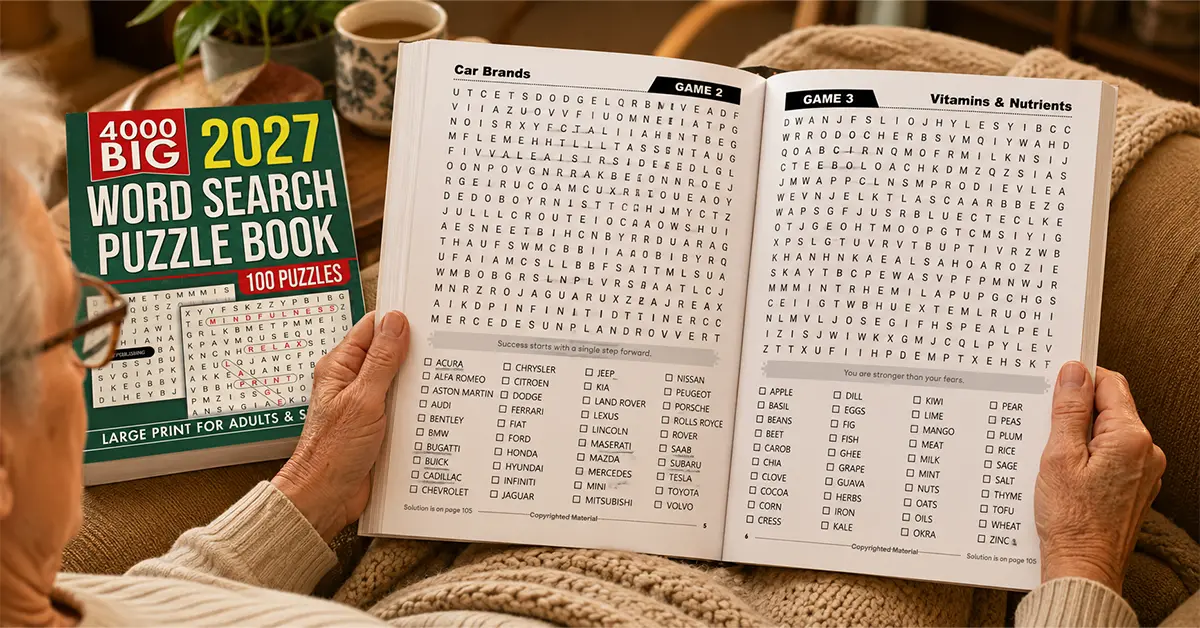
Large print word search books for seniors are a commercial KDP niche with steady gift and accessibility demand. Build grids in the word search generator and follow the full word search publishing guide. This publisher playbook covers real font sizes, 8.5x11 formatting, themes that sell, covers, and listing SEO so your book competes as a product, not a free printable.
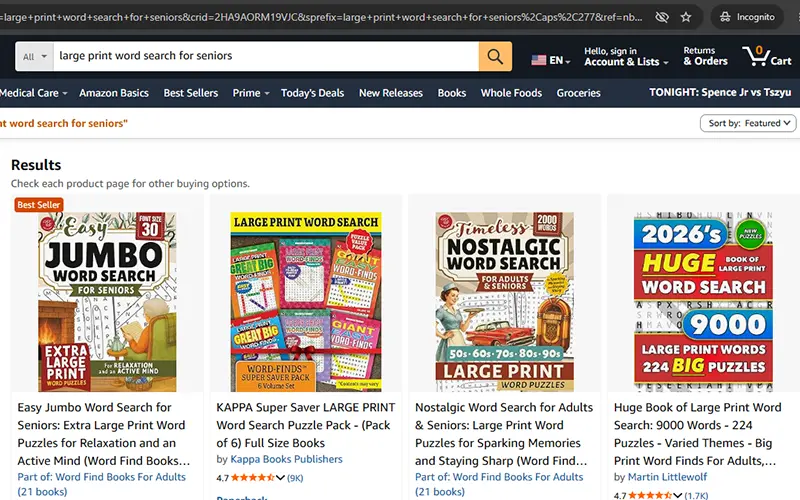
The large-print puzzle book market for seniors is one of the most reliable and consistently underserved niches on Amazon KDP. Demand is structural, aging demographics, visual accessibility needs, and the gift-buying patterns of adult children purchasing for elderly parents create a buyer pool that is predictable, loyal, and growing every year.
The niche is also underserved in a specific way: most large-print word search books for seniors fail on one of three dimensions, the print is not actually large enough to be comfortable, the word lists are generic and unsatisfying, or the production quality (binding, paper, margins) does not match the price. Publishers who get all three right consistently earn more reviews, more stars, and more repeat series purchases than any other puzzle sub-niche.
This playbook covers everything you need to dominate this niche: understanding the buyer, designing for accessibility, choosing the right word themes, formatting for comfort, pricing and listing for visibility, and building a series that earns long-term royalties.
See also: 8.5×11 trim for large print, large-print solution pages, and senior-friendly word list themes.
Understanding the Large Print Senior Buyer
Before you create a single puzzle, you need to understand who is buying and what drives their purchase decision.
The direct buyer (the senior themselves):
Searches by need and comfort. "Large print" is not a style preference, it is a functional requirement. Buyers in this group read reviews carefully and care deeply about usability: How big is the print really? Can I read it without a magnifying glass? Do the letters fit comfortably in each grid cell?
The gift buyer (adult child or caregiver):
This buyer is purchasing for a parent, grandparent, or care recipient. They often buy based on visual cover appeal, "large print" label prominence, and topic suitability for their recipient. Gift searches spike in November-December, February (Valentine's), and May (Mother's Day). This buyer reads reviews about readability because they cannot personally test the print size.
What both buyers want:
- Genuinely large print (not just "larger than standard", actually readable without glasses or with mild prescription only)
- Familiar, accessible word themes (nature, animals, kitchen, travel, faith, classic TV shows, decades-themed nostalgia)
- Clean, uncluttered page layout with comfortable white space
- A solution section at the back
- Reasonable price for the value ($9.99-$14.99 is the sweet spot for this niche)
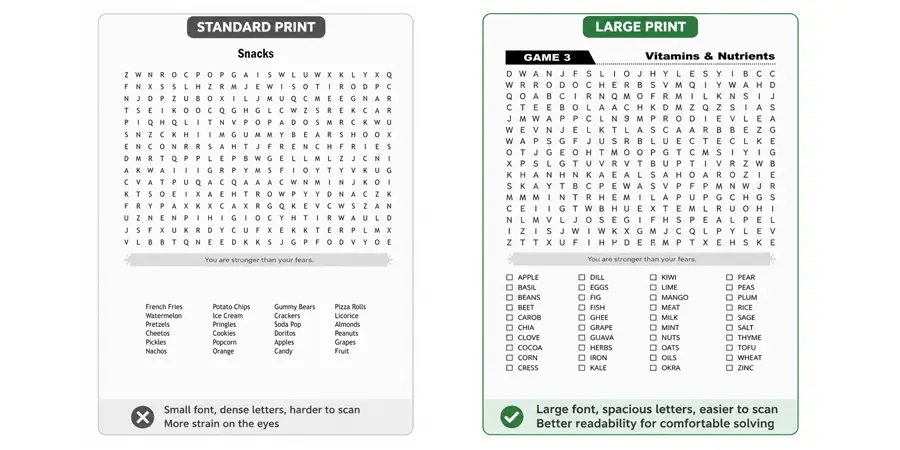
What "Large Print" Actually Means for Word Search Books
The term "large print" is used loosely on Amazon. For a word search book to legitimately claim large print for seniors, it must meet specific usability standards:
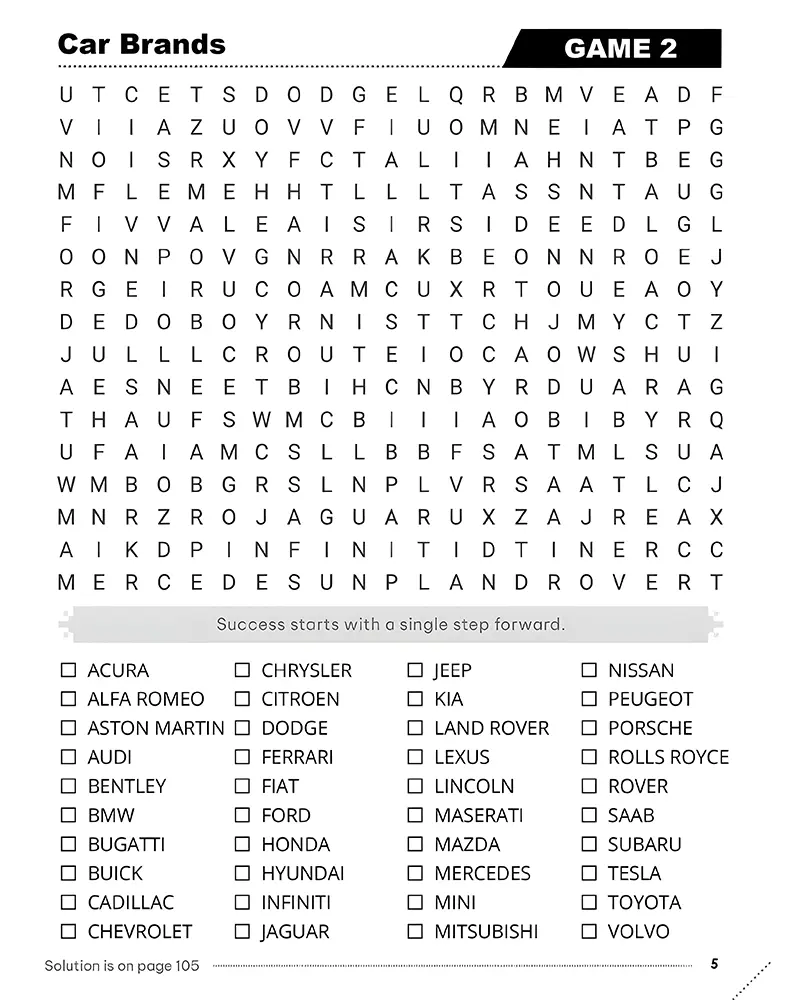
Grid letter size: A minimum of 14pt font for the letters in the word search grid itself. Premium large-print editions use 16-18pt. Below 14pt is not comfortably readable for most seniors without magnification.
Grid density: A 12x12 or 15x15 grid with 14pt+ letters will naturally be larger than a 20x20 grid with 10pt letters. Reduce grid density (fewer letters per grid) to allow larger letter size within the page dimensions.
Word list font: The list of hidden words at the bottom or side of the puzzle should also be large, minimum 13pt, ideally 15pt for senior editions.
Line spacing: Generous leading (line spacing) in the word list and any introductory text. Crowded line spacing is as fatiguing as small font.
Paper: Cream paper (KDP option) is preferred by many senior readers, it has lower contrast than stark white and reduces eye strain in extended reading sessions.
Margin generosity: Wider margins than minimum-spec allow the book to open flat and keep puzzle content away from the gutter. Seniors who hold books for extended periods benefit from wide outer margins.
Practical test: Before publishing, print a single test page at home and show it to someone over 65. Ask them to read the grid letters without leaning in. If they have to lean in or squint, the print is not large enough.
Choosing Word Themes That Seniors Love
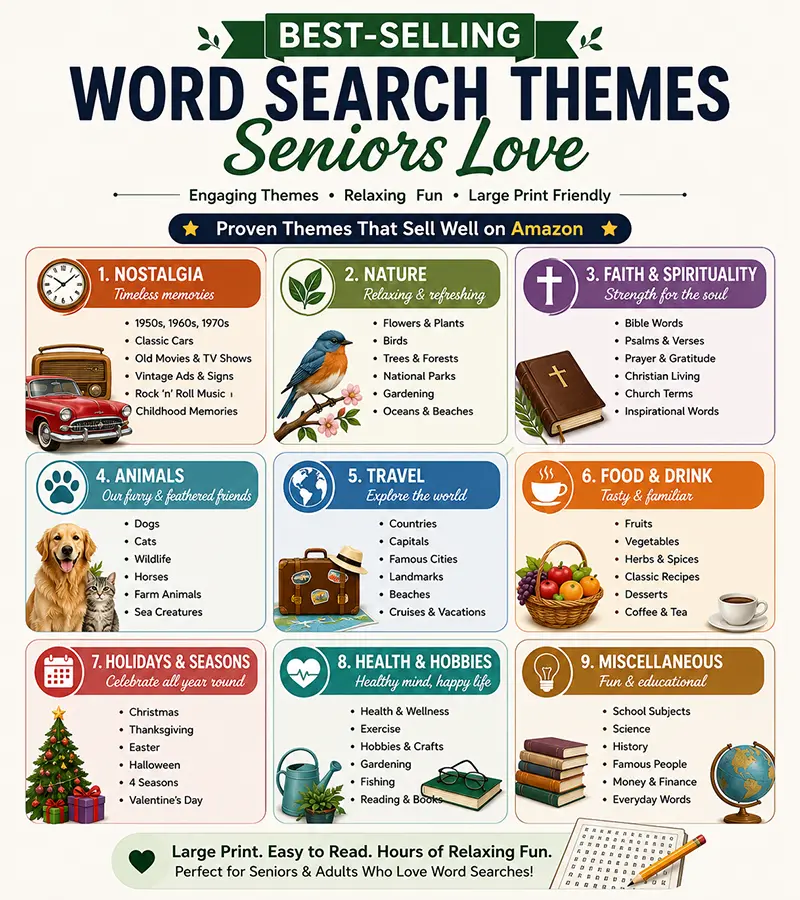
Theme selection is the single biggest differentiation lever in the large-print senior word search niche. Generic word lists ("Sports", "Animals") perform significantly worse than specific nostalgic or interest-aligned themes.
High-performing theme categories for seniors:
Nostalgia themes:
- Classic Hollywood stars (names from the 1940s-1970s)
- Golden Age TV shows
- Old-fashioned kitchen and household words
- Names popular in mid-20th century
- Classic cars and music from specific decades
Nature and leisure themes:
- Birds and birdwatching (very strong for this demographic)
- Garden and flowers
- Seasons and holidays
- State parks and national landmarks
- Ocean, beach, and coastal themes
Faith and values themes:
- Bible words and scripture names
- Hymns and gospel music
- Church, prayer, and community words
Interest and hobby themes:
- Knitting, quilting, crafts
- Cooking and baking
- Travel and world destinations
- Classic sports (golf, fishing, bowling)
Comfort and warmth themes:
- Family words (grandmother, grandchildren, family reunion)
- Home and cozy living
- Comfort food and Sunday dinners
What to avoid:
- Themes with contemporary pop culture references (TikTok, streaming shows, memes), these do not resonate with the target demographic and can generate confused reviews
- Words with unusual spelling or obscure vocabulary, the solving experience should be comfortable, not challenging
Formatting a Large Print Word Search Interior
A large-print senior word search interior has different formatting priorities from a standard word search book.
Page layout priority: readability over density
On a standard word search page, the goal is to pack a puzzle and word list onto one page efficiently. On a senior large-print page, the goal is readability and comfort, even if that means fewer puzzles per page or a slightly lower puzzle count per book.
Recommended grid specification for senior large print:
- Grid size: 14x14 to 17x17 letters maximum (at 8.5x11 trim)
- Letter font: 15-18pt, bold or semi-bold weight, sans-serif typeface (easier to distinguish letters than serif fonts at larger sizes)
- Grid cell spacing: generous, each cell should have visible padding
- Word list: 15pt, 1.5x line spacing, two columns maximum
Trim size recommendation: 8.5x11 in is effectively required for a genuine large-print senior word search book. At 6x9, you cannot fit a comfortable large-print grid without reducing the grid to sizes that feel trivial. The 8.5x11 trim also signals "large print" to gift buyers scanning thumbnails.
Solution section: Include compact solved grids at the back. For senior large-print books, keep solutions at a readable size, 4 per page rather than 6 or 9. The solution pages are used for checking, not decoration.
Cover Design for Senior Word Search Books
Cover design for this niche follows specific conventions that the bestselling titles share.
Cover signals that work:
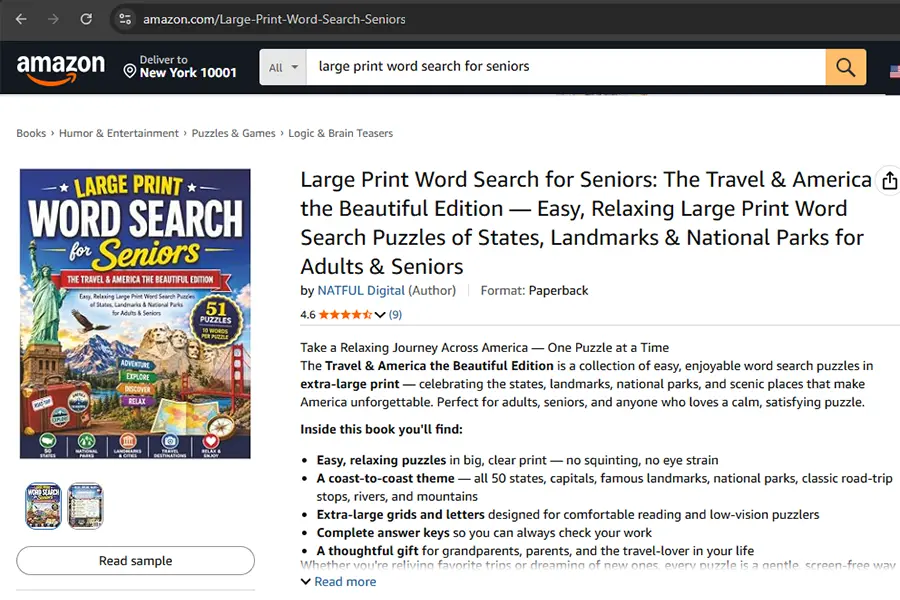
- "LARGE PRINT" prominently on the front cover: this must be the second-most visible element after the title. Gift buyers scan for this label.
- Soft, warm color palette: pastels, nature colors, warm tones. Bright neon or aggressive design aesthetics do not match the buyer's aesthetic expectations.
- Nature or theme imagery: birds, flowers, landscapes, or a tasteful abstract grid pattern. The theme of the book should be reflected on the cover.
- Clean, readable title typography: ironically, large-print book covers are often where publishers fail on their own readability standards. Use a typeface that reads clearly at thumbnail size.
- Volume number visible: series buyers look for Vol. 2 when they finish Vol. 1.
Cover design mistakes to avoid:
- Busy, cluttered covers with too many elements
- Small or thin title text (creates perceived mismatch with "large print" claim)
- Generic puzzle imagery (pencil on blank page) without thematic connection
- Dark backgrounds (they photograph poorly at thumbnail size in Amazon search)
KDP Listing Optimization for Senior Word Search
Title Formula
Large Print Word Search [Theme] for Seniors, Vol. [N]: [Puzzle Count] [Word List Description]
Examples:
- Large Print Word Search for Seniors, Vol. 1: 60 Easy Puzzles with Big Letters and Solutions
- Large Print Bird Watching Word Search for Seniors, 50 Nature-Themed Puzzles
- Large Print Word Search: Nostalgic TV Shows and Classic Movies. Vol. 2
Subtitle Strategy
Your subtitle is indexed. Include: "large print", "seniors", "easy to read", your theme, and puzzle count. Do not pad with vague adjectives, be specific.
Backend Keywords
large print word search seniors elderlyword search books for seniors large printeasy word search big letters older adultslarge print puzzle book gift for grandmaword search for seniors with dementiasenior activity book large print puzzlesbig print word search nature theme
Categories
- Books > Humor & Entertainment > Word Games > Word Search
- Books > Health, Fitness & Dieting > Aging or Books > Crafts, Hobbies & Home > Crafts & Hobbies > Puzzles
Request "Large-Print Word Search" as a specialty category via Author Central. This is a recognized sub-category on Amazon.
Pricing and Series Strategy
Pricing benchmarks:
- 50-60 puzzles, 8.5x11: $10.99-$13.99
- 70-80 puzzles, 8.5x11: $12.99-$15.99
- Gift-wrapped edition or special theme: $14.99-$17.99
This niche supports a slightly higher price than standard word search because the accessibility feature is valuable and buyers recognize the premium. The print cost is also higher (larger trim, more pages per puzzle due to grid size), so the higher price is justified in your royalty calculation.
Series architecture for maximum return:
Build a primary series with consistent branding and sequential volumes (e.g., "Sunny Days Large Print Word Search. Vol. 1, 2, 3..."). Then build themed micro-series alongside it: a "Birds and Nature" series, a "Faith and Scripture" series, a "Decades Nostalgia" series. Each micro-series occupies a separate keyword position and attracts its own buyer.
The primary series builds brand recognition; the themed micro-series captures specific search intent. Combined, they create a portfolio that earns from multiple search paths.
Using RodBooks for Large Print Senior Word Search Production
RodBooks Word Search Generator supports:
- Custom word lists (enter your themed words)
- Configurable letter size and grid density for true large-print output
- 8.5x11 trim preset
- Book assembly with front matter and solution pages
- PDF export at print resolution
Build your large print word search book →
Frequently Asked Questions
What font size is "large print" for word search books?
There is no universal standard, but the publishing convention is 14pt minimum for grid letters in a word search book. Premium senior editions use 16-18pt. The test is practical: a reader with presbyopia (common age-related farsightedness) should be able to read the grid at arm's length without magnification.
Do large print puzzle books for seniors actually sell better than standard size?
In the senior-targeted niche, yes. The search term "large print word search for seniors" has distinct search volume from "word search book for adults" and the buyer intent is more specific. Conversion rates are generally higher because buyers have a clear functional need being met.
Should I include a difficulty label on a large print senior word search?
Difficulty labeling on large-print senior editions should be "Easy" or at most "Medium." This audience values accessibility and comfort over challenge. A "Hard" label on a large-print senior word search is a positioning mismatch that generates confused reviews.
How do I handle the solution section for large print books?
Keep solutions readable, 4 per page rather than 6-9. The solutions serve a functional purpose for this audience: checking their work and confirming answers. Tiny illegible solution grids are a consistent complaint in reviews for this niche.
Is "large print for seniors" too narrow a niche?
No. Amazon's search volume for large-print senior puzzle books is significant and consistent. More importantly, the buyer is highly specific. They know exactly what they want, and a book that delivers it cleanly gets loyal reviews and repeat purchases. Niche specificity is a feature, not a limitation.
Pre-Publish Checklist
- Print size verified at 14pt+ for grid letters
- Trim size confirmed as 8.5x11
- Word theme selected from high-appeal category (nostalgia, nature, faith, interest)
- Word list is appropriate for the demographic (no obscure or contemporary slang)
- Page layout printed and tested at home with a senior reader (or simulated test)
- "LARGE PRINT" prominently on cover
- Interior previewed and confirmed readable at print size
- Solutions section included at 4 per page
- Title follows large print + theme + seniors formula
- Backend keywords cover gift buyer and accessibility search terms
- Price reflects 8.5x11 print cost and premium positioning
- Themed micro-series planned alongside primary series