Word Lists for Puzzle Books: Themes That Sell on KDP
Word lists for puzzle books: themes that sell on KDP, how to build lists buyers search for, and how to turn them into interiors.
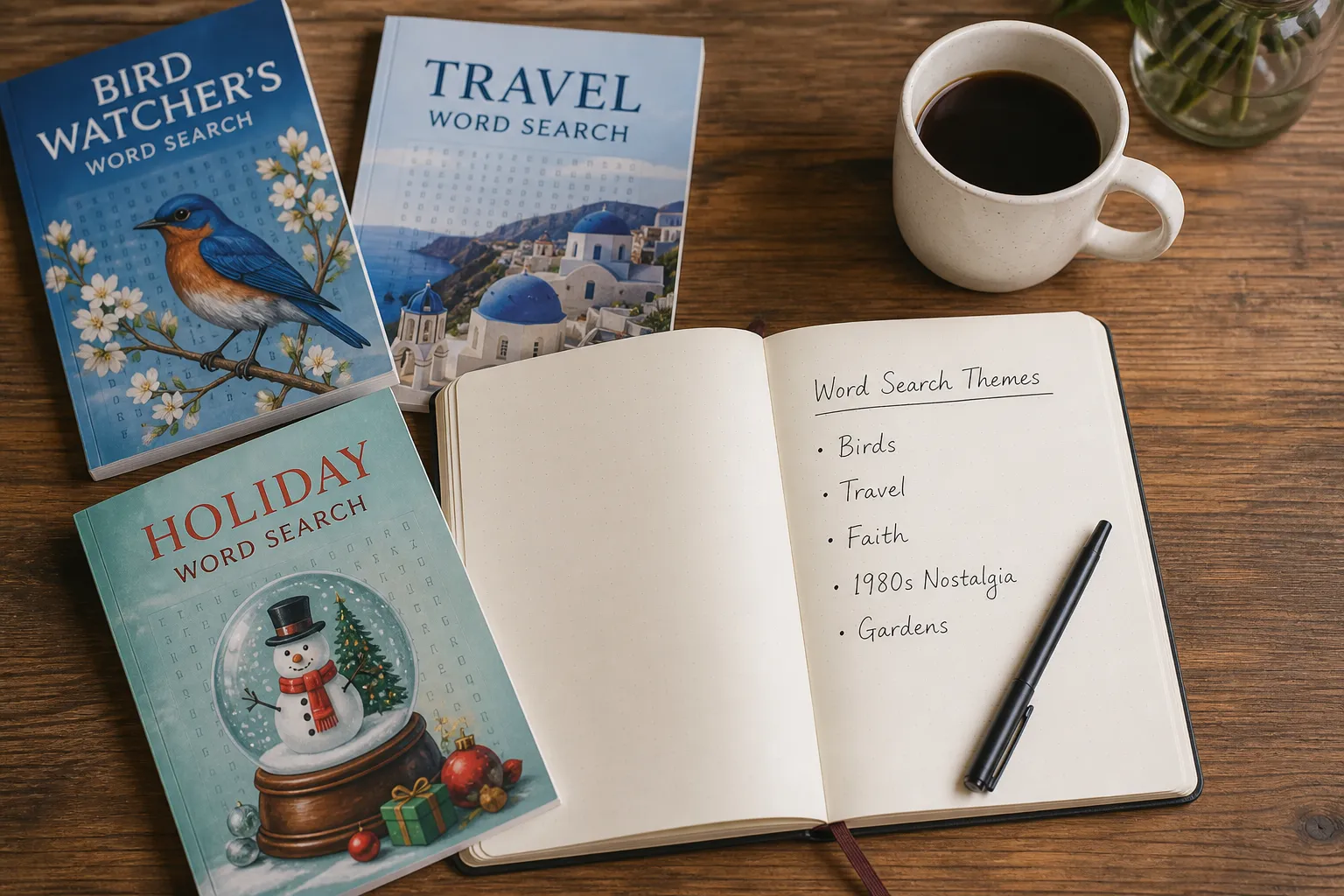
Word lists for puzzle books decide whether a theme feels specific enough to buy. Match themes to real Amazon searches, time seasonal lists with the seasonal puzzle book calendar, and generate grids in the word search generator or crossword generator.
The word list is the soul of a word search or crossword puzzle book. It determines whether buyers feel engaged, nostalgic, challenged, or delighted, or whether they finish the book and feel nothing. The difference between a generic puzzle book that earns 3 stars and a themed one that builds a loyal series audience is usually the specificity and resonance of the word lists.
This is not a creative writing problem. It is a research and positioning problem. The themes that sell consistently on Amazon KDP follow identifiable patterns. They align with specific audience interests, seasonal demand cycles, gift-buying behavior, and the psychology of completion and recognition. Once you understand those patterns, building word lists becomes a systematic process.
This guide covers: which themes perform best by audience, how to structure word lists for crosswords vs. word search, evergreen vs. seasonal strategy, how to generate word lists efficiently, and a complete theme library organized by category.
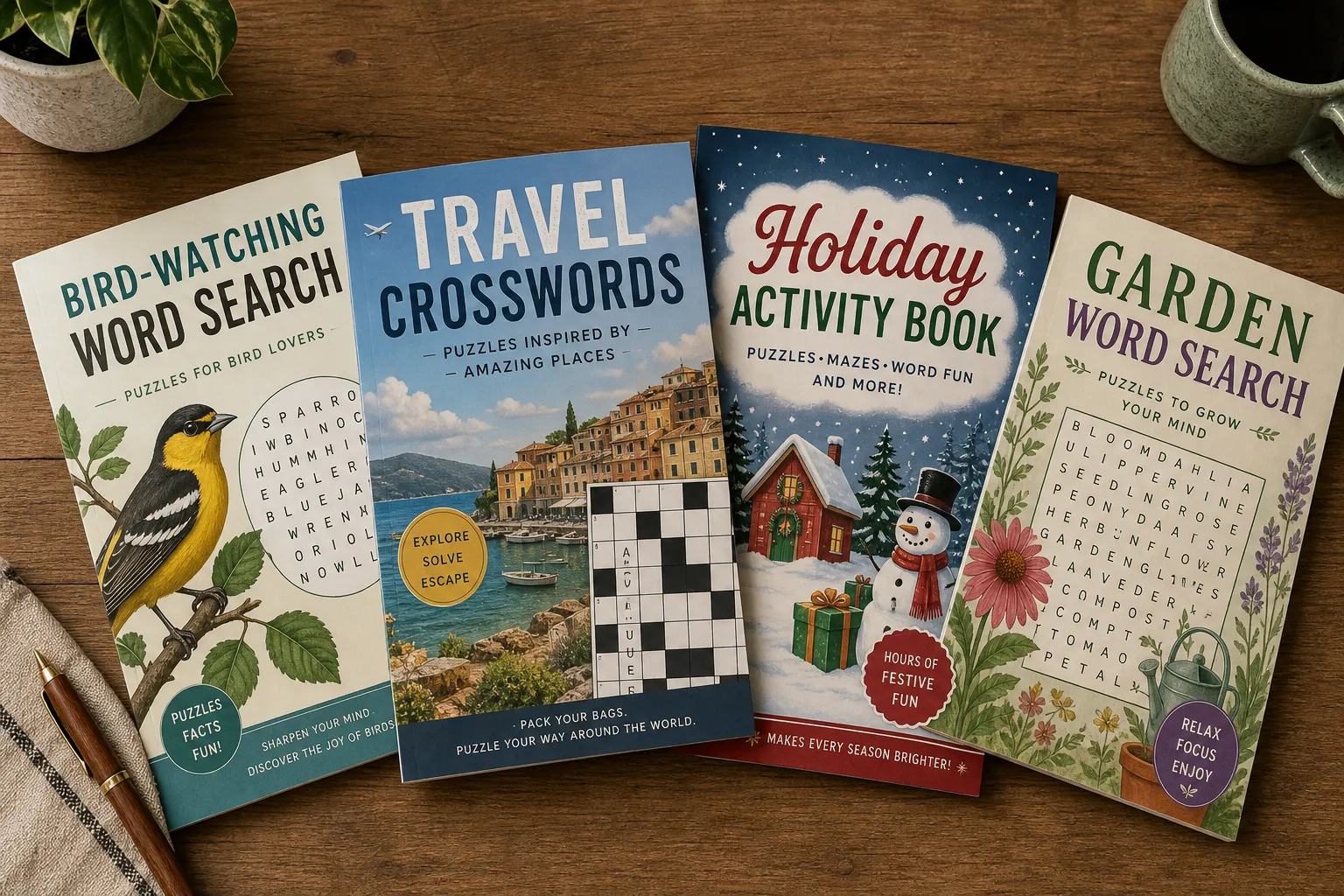
See also: turn lists into word search books, crossword themes from the same lists, and validate themes with autocomplete.
Why Theme Outperforms Generic in Puzzle Book Sales
A "Word Search Book for Adults" competes with thousands of identical listings. A "Bird Watching Word Search Book for Nature Lovers" competes with dozens. Specificity narrows competition and sharpens the buyer signal.
Themed puzzle books outperform generic for four reasons:
1. Gifting clarity. A bird-watching word search is an obvious gift for a bird enthusiast. A gift buyer does not need to think, the match between the recipient's interest and the product is immediate. This drives impulse purchases.
2. Search intent alignment. A buyer searching "bird word search book" has stronger buying intent than one searching "word search book." The themed search has already qualified the buyer. Conversion rates for themed titles are consistently higher than for generic titles.
3. Review quality. Buyers who purchase a themed book that delivers on its promise are more likely to leave detailed, enthusiastic reviews. "The Bird Watching themed puzzles were perfect for my mom who loves birds" is a review that converts the next buyer.
4. Series architecture. Themes create natural series structures: Volume 1 (Birds), Volume 2 (Flowers and Gardens), Volume 3 (Ocean and Marine Life). Each volume serves the same audience and cross-sells the others. A buyer who loved Vol. 1 searches for Vol. 2.
The Theme Performance Framework
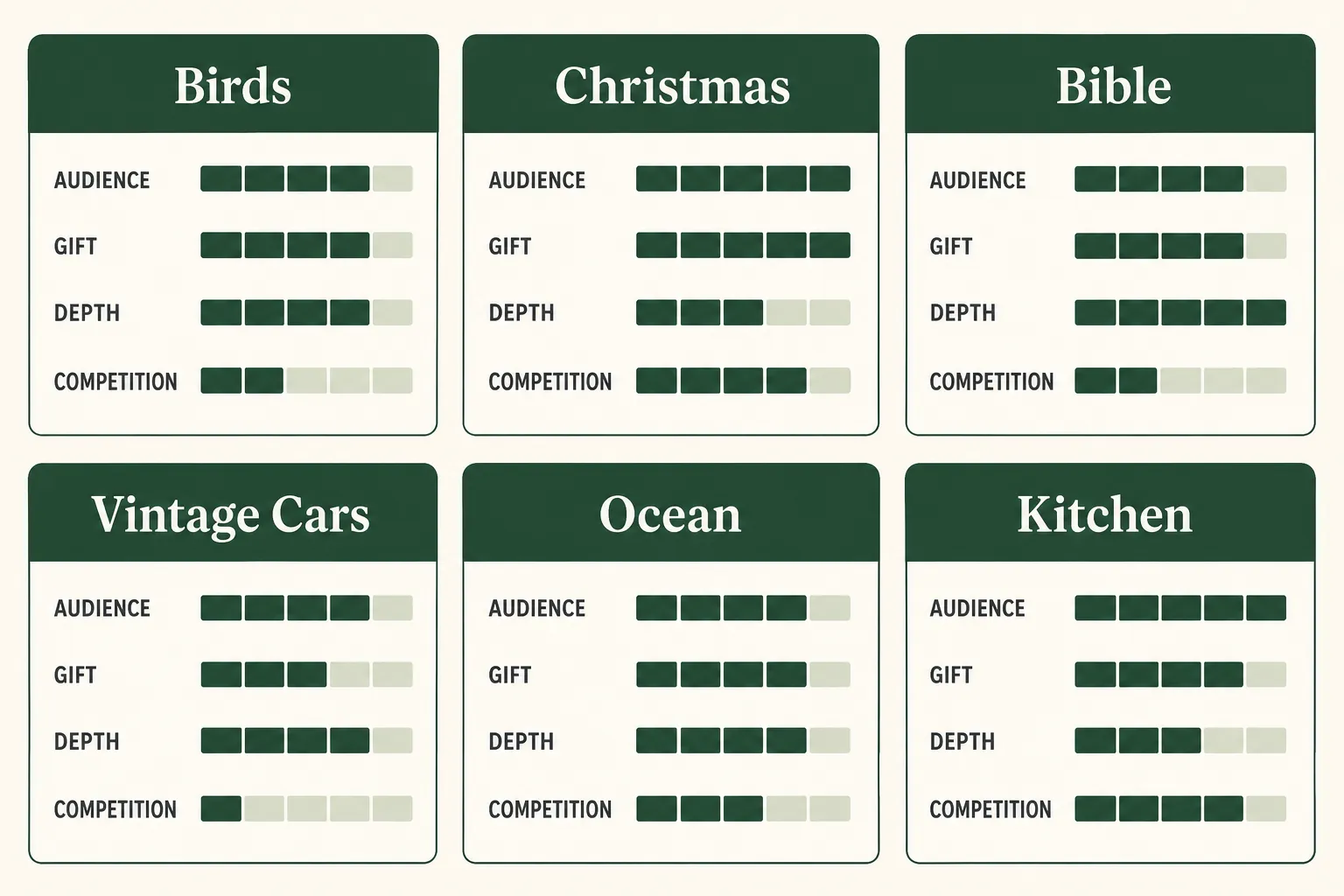
Themes perform differently based on audience reach, gift signal strength, seasonal hooks, and word list depth. Use this framework to evaluate any theme before building:
Audience reach: How many potential buyers does this theme attract? (Birds: large, millions of birdwatchers globally. "Vintage Tractors": niche, passionate but small.)
Gift signal strength: Does this theme translate clearly to a gift product? (Grandma gifts: very high. "Advanced Calculus Terms": very low.)
Word list depth: Can you fill 50-100 unique, thematically consistent words without repeating or padding with tangential words? (Nature: very deep. "Types of Knots": limited.)
Seasonal hooks: Does this theme connect to calendar events that generate search spikes? (Christmas: very high. General nature: low seasonal spike but evergreen.)
Competition level: How crowded is this exact theme on Amazon? (Bible Word Search: crowded. "1970s Nostalgic TV Shows Word Search": moderate, winnable.)
The Master Theme Library. Organized by Category
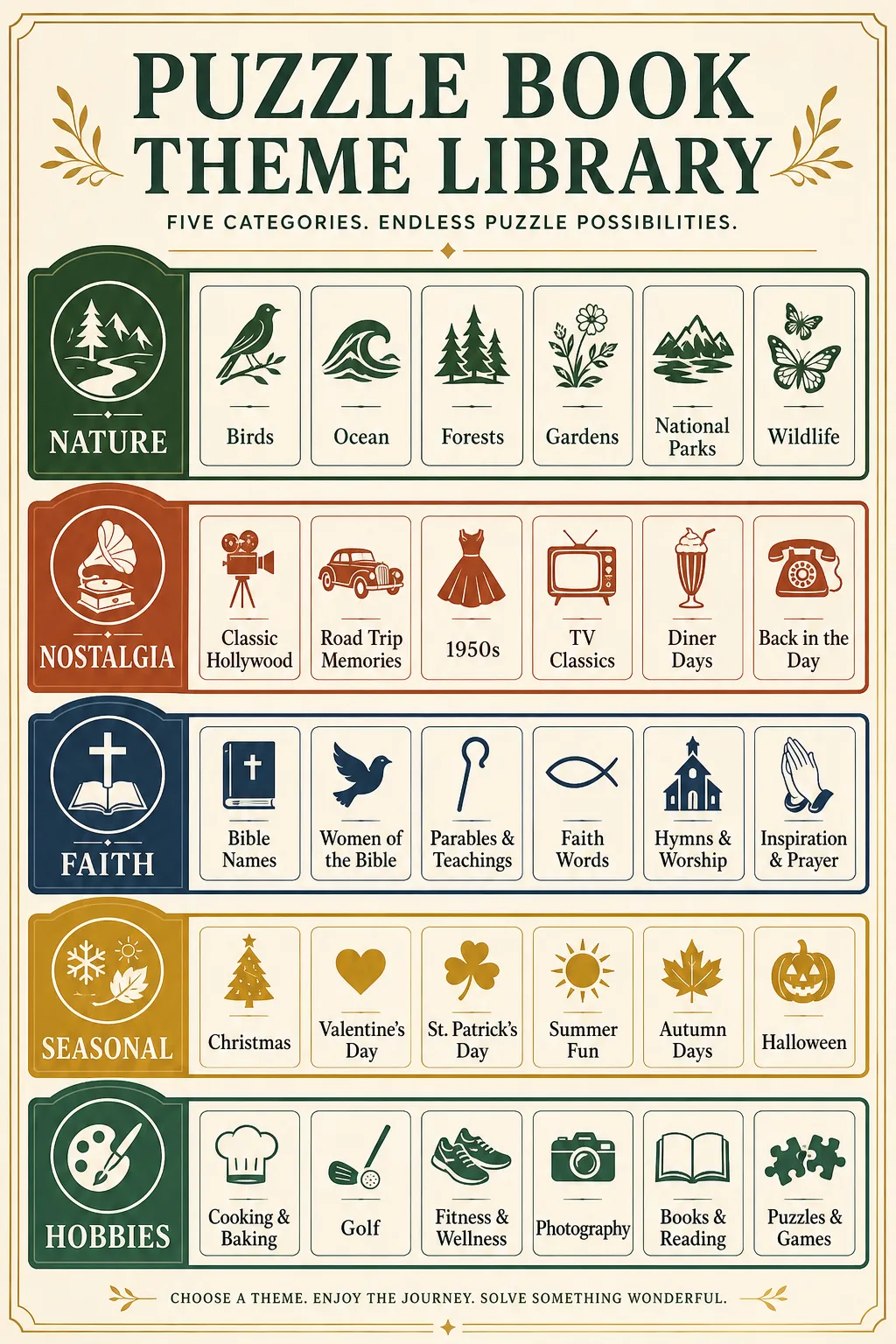
This is a curated list of themes organized by category, with notes on the specific angle that works best for each.
Nature and Outdoors
Birds and Birdwatching
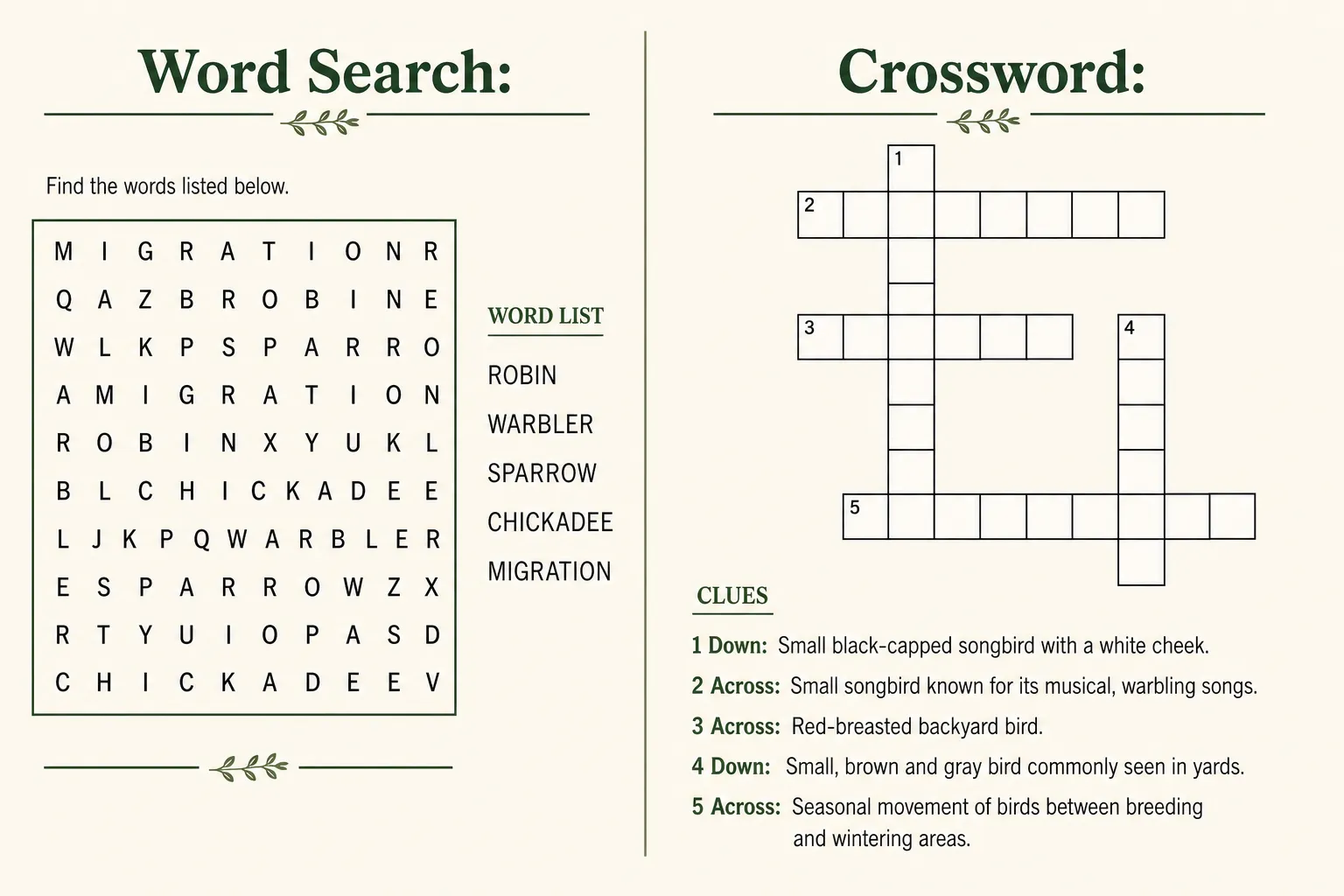
One of the top-performing puzzle book themes. The audience is large, passionate, and skews older (strong crossover with large-print senior buyers). Cover and title the book specifically: "Backyard Birds", "Birds of North America", "Songbirds and Their Names." Sample words: Robin, Warbler, Chickadee, Migration, Feeder, Wingspan, Nest.
Ocean and Marine Life
Strong visual theme. Works for adults and kids. Sea creature names, oceanic geography terms, nautical words. Segment by angle: "Deep Sea Creatures," "Coastal Birds and Sea Life," "Sharks and Ocean Predators."
Flowers and Gardens
Premium gift item for gardeners. Word list depth is excellent, hundreds of flower names, gardening terms, plant care words. Segment: "English Garden Flowers," "Wildflowers of North America," "Herbs and Kitchen Garden."
Forests and Trees
Nature-walks and hiking crossover. Tree names, forest animals, seasons in nature.
National Parks and Landmarks
Strong travel crossover. Park names, geographic features, wildlife found in parks. "Discover America" series angle.
Nostalgia and Decades
Classic Hollywood (1940s-1970s)
One of the most reliable senior gift themes. Actor and actress names, classic film titles, Oscar-winning movies, studio names. The audience (senior buyers and their gift-giving adult children) has deep emotional connection.
1950s Nostalgia
Diner culture, rock and roll pioneers, classic car names, TV shows, soda fountain terms. Extremely strong gift signal for the 70-85 age demographic.
1960s and 1970s
Cultural touchpoints: space race, classic rock bands, TV shows, fashion terms. Works for the 60-75 age demographic.
Vintage TV Shows
Game shows, sitcoms, westerns, detective shows from pre-cable era. Very high recognition rate in senior buyers.
Classic Board Games and Toys
Childhood game names, toy brands, playground activities. Nostalgia + childhood combination is a powerful emotional hook.
Faith and Inspiration
Bible Names and Places
Consistently in the top-performing themes for word search books. Enormous, deep word list (biblical names, places, events, concepts). Segments well: "Old Testament Names," "New Testament Words," "Books of the Bible," "Psalms and Prayers."
Hymns and Gospel Music
Hymn titles, gospel song names, worship terms. Strong church and faith community gifting signal.
Inspirational and Motivational Words
Positive affirmations, virtue words, encouragement terms. Works well as a gift across demographics.
Saints and Faith Heroes
Names of saints, missionaries, faith leaders throughout history. Strong appeal for Catholic and Christian gift buyers.
Holidays and Seasonal
Christmas
Perennial top seller. Word list is well-known and expected: Christmas tree decorations, carols, Santa and reindeer, winter foods, gift-giving terms. Publish 8-10 weeks before December.
Thanksgiving
Shorter selling season than Christmas but strong family-gathering gift signal. Food words, gratitude terms, harvest vocabulary.
Halloween
Strong for kids and adults. Monster names, candy names, costume words, spooky terms. Publish in early September.
Easter
Religious and secular versions both work. Spring themes, Easter egg hunt words, biblical resurrection vocabulary.
Valentine's Day
Love and romance vocabulary, famous love stories, flowers, gifts. Short selling window but spikes sharply in January-February.
Summer and Fourth of July
Patriotic themes, summer activity words, American geography. Good filler title between Q4 seasons.
Hobbies and Interests
Cooking and Baking
Deep word list: ingredients, cooking techniques, kitchen equipment, world cuisines, recipe terms. Segments well: "Italian Kitchen," "French Pastry Terms," "Home Baking Words."
Quilting and Sewing
Passionate, loyal niche. Quilting patterns, sewing techniques, fabric types, tool names. Very strong gift signal within the craft community.
Knitting and Crochet
Same loyal audience as quilting. Stitch names, yarn types, project terms, tool names. Gift-worthy for the craft buyer.
Fishing and Hunting
Strong male-skewing niche. Fish species, fishing gear, knot names, hunting terms. Works for direct purchase and as a gift for the outdoor enthusiast.
Golf
Dedicated, passionate audience. Golf terms, famous courses, legendary players, equipment names.
Travel and World Destinations
Countries, capitals, famous landmarks, currency names, languages. "Around the World" series structure. Works globally.
Building a Deep, Quality Word List
Once you have a theme, you need to build the actual word list. Quality word lists have three characteristics:
Thematic consistency. Every word belongs clearly to the theme. "CHRISTMAS" as a puzzle theme should not include random December events that don't relate to Christmas itself. Buyers notice thematic drift, especially in reviewed books.
Appropriate vocabulary level. Easy/senior word search books need common, recognizable words. Expert crossword clues can use obscure vocabulary. Match the vocabulary to your stated audience.
Sufficient depth. A word search grid typically needs 15-30 words. A crossword needs 20-50+ answer words. You need a word list at least 1.5x longer than your puzzle requires so you can select the best-fitting words for each grid without running short.
Word list building process:
- Start with a core list of 50-100 obvious words in your theme. These are the words every buyer will recognize and expect.
- Expand with secondary words, adjacent vocabulary, technical terms, related names. Research Wikipedia, thematic dictionaries, enthusiast sites.
- Filter for fit, remove words that are too short (under 3 letters), too long for your grid, or too obscure for your audience level.
- Review for redundancy, avoid synonyms or near-duplicates that make the puzzle feel padded.
- Test for recognition, would the target buyer know this word? When in doubt, remove it.
Word List Differences: Word Search vs. Crossword
The same theme produces different word lists depending on the puzzle type.
For word search books:
- Words can be any length (typically 4-12 letters work best in a standard grid)
- No clues needed, the word itself IS the answer
- Duplicate first letters are acceptable (ROBIN and RED can both be in a bird puzzle)
- Place the word list at the bottom or side of the puzzle page, clearly labeled
For crossword books:
- Words must CROSS each other, letter intersection compatibility matters
- Each word needs a CLUE, you are writing two things: the answer word and the clue text
- Clue difficulty should match your stated level (easy: straightforward definitions; hard: wordplay, indirect references)
- Shorter words (3-7 letters) are often more valuable in crossword construction because they fill crossing squares
- Clue writing is a creative skill, vary between definitions, fill-in-the-blank, trivia, and wordplay
Seasonal Planning: When to Publish Themed Books
Themed puzzle books must be live on Amazon before their season peaks: Amazon needs time to index your title, and you need reviews before the buying window opens.
Recommended lead times:
| Season / Holiday | Publishing Deadline | Search Peak |
|---|---|---|
| Christmas | September 15 | November-December |
| Halloween | August 1 | October |
| Thanksgiving | September 1 | November |
| Valentine's Day | December 15 | January-February |
| Easter | February 1 | March-April |
| Mother's Day | March 1 | May |
| Father's Day | April 1 | June |
| Back to School | June 1 | August-September |
Evergreen themes (birds, faith, cooking, nostalgia) can be published at any time but benefit from a Q4 launch, gift search traffic in November-December provides a natural initial sales spike for any book in the system.
Using RodBooks to Build Themed Puzzle Books
RodBooks Word Search Generator allows you to enter custom word lists and generate puzzle grids around your specific theme:
- Enter your themed word list manually or paste from a prepared list
- Configure grid size, difficulty, and layout for the word search format
- Preview how the theme's words lay out in the generated grid
- Compile themed books with consistent branding across volumes
For crossword themes, RodBooks Crossword Generator supports word-driven freeform generation where your specific answer words drive the puzzle structure.
Start building a themed puzzle book →
Frequently Asked Questions
How many words does a word search book need per puzzle?
A standard word search grid (15x15 to 20x20) typically hides 15-30 words. The word list printed on the page (the words solvers look for) should match the number of hidden words exactly. Have 20-30% more words in your master list than you need so you can select the best-fitting ones for each grid.
Can I reuse words across multiple puzzle books?
No, if you reuse the same word list in multiple published books, Amazon's content team may flag them as duplicate content. Each volume must contain original puzzles with a genuinely different arrangement. Themes can be similar (Vol. 1: Garden Flowers, Vol. 2: Wildflowers) but the word lists and grids must be distinct.
How specific should my theme be?
More specific is usually better up to the point where your word list runs out of depth. "Birds" is good; "Birds of the American Southwest" is better (differentiates from generic bird books); "Hummingbirds" might be too narrow unless you can fill 25+ distinctive hummingbird-related words.
Should I write my own crossword clues or can I use AI?
You can use AI to generate clue drafts, but review every clue before publishing. AI-generated clues sometimes contain factual errors (wrong definitions, incorrect facts) that solvers will catch and review negatively. Fact-check every clue, especially for trivia and biographical answers.
How do I find word lists for niche themes?
Wikipedia is excellent for specific topic word lists (list of bird species, list of national parks, list of Bible names). Thematic dictionaries and field guides are useful for specialized vocabulary. Enthusiast forums and community sites reveal the vocabulary the target buyer actually uses and recognizes.