Seasonal Puzzle Book Calendar for Amazon KDP Publishers
Month-by-month publish windows for holiday and seasonal puzzle books on Amazon KDP: Christmas, Halloween, back-to-school lead times, themes, and listing timing.
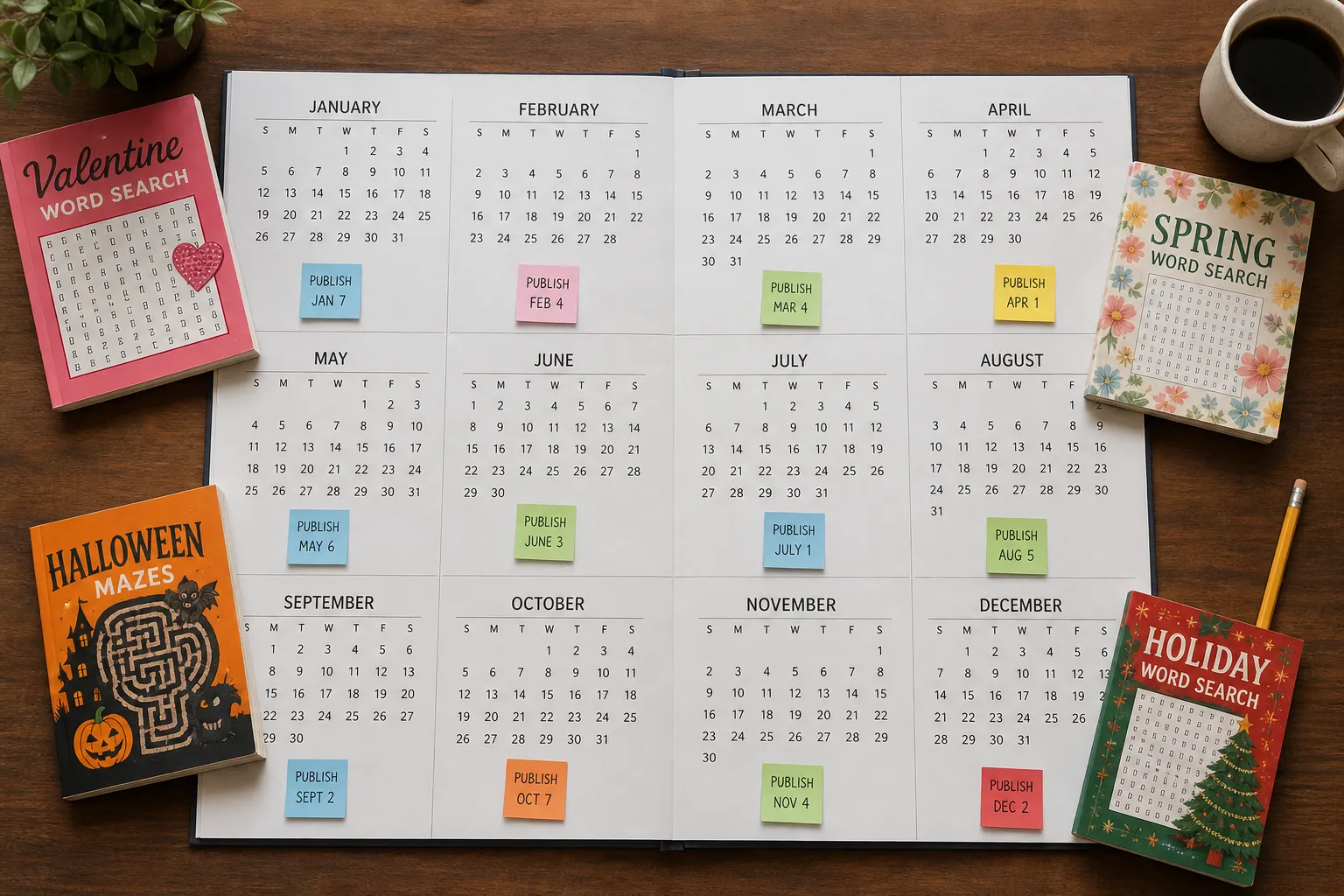
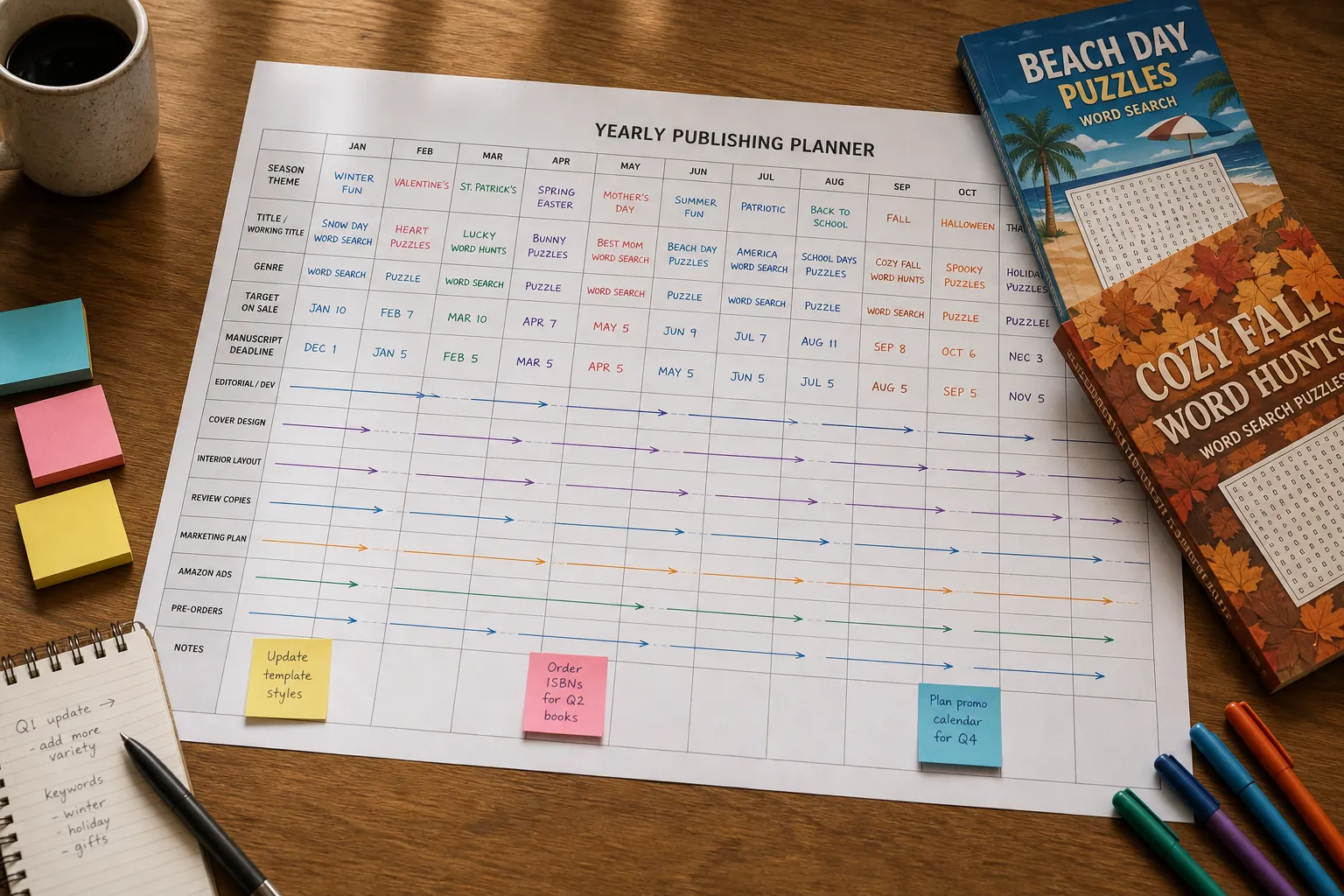
A seasonal puzzle book calendar for KDP keeps you publishing 8 to 10 weeks before peak search, not during it. Plan dates in the KDP seasonal calendar and build themed lists from word lists and themes that sell. This month-by-month calendar covers Christmas, Halloween, Mother's Day, and evergreen cadence so titles are indexed before demand spikes.
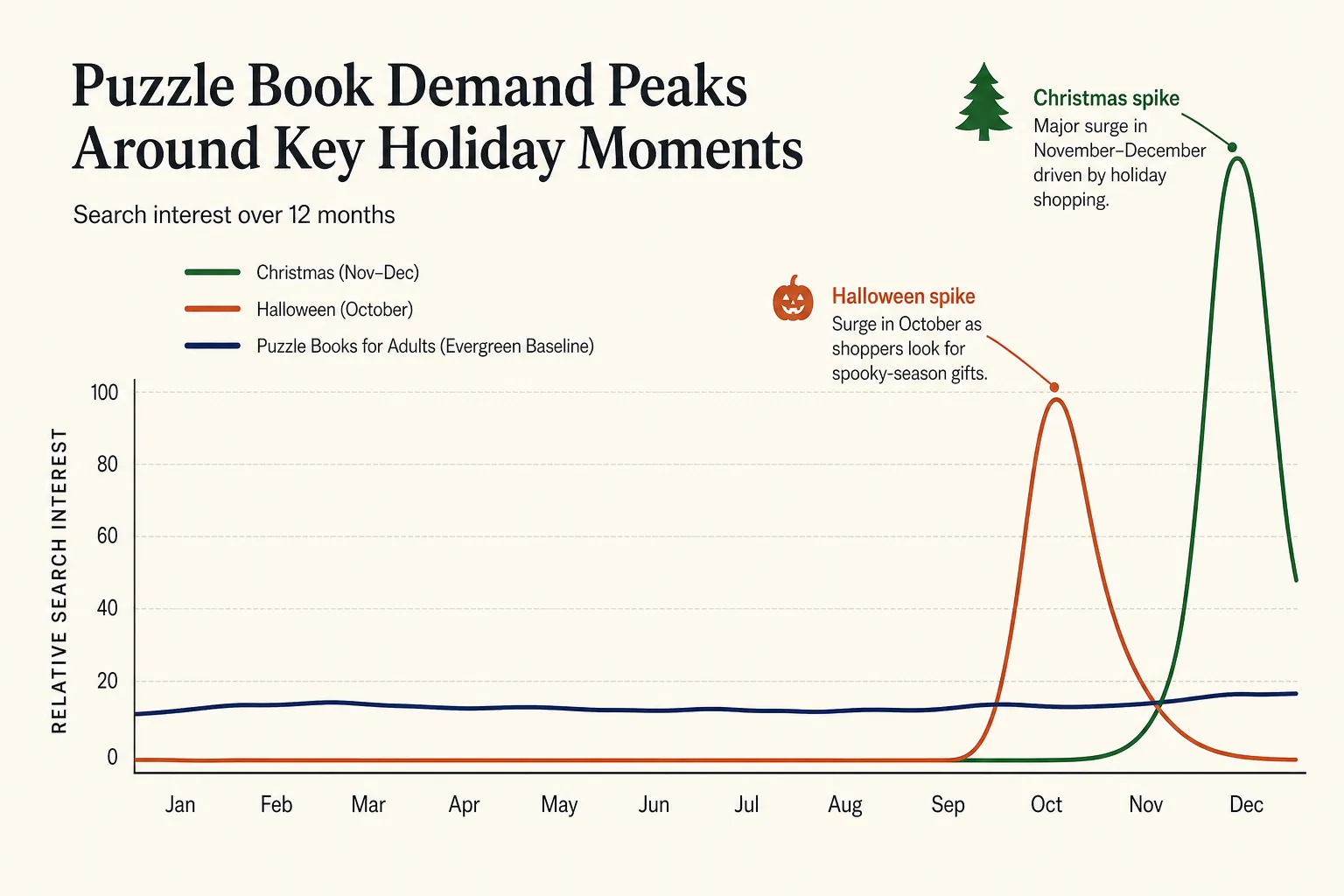
Timing is the least discussed and most impactful variable in KDP puzzle book publishing. A perfectly produced Christmas maze book published in December is nearly invisible. Amazon hasn't indexed it, it has no reviews, and the search algorithm hasn't learned to rank it yet. The same book published in September can ride the indexing curve to reach page-one rankings just as holiday search volume peaks.
This guide gives you the complete seasonal publishing calendar for puzzle books: the key Amazon sales seasons, lead times by book type, how to align your production calendar with Amazon's indexing rhythm, evergreen vs. seasonal portfolio balance, and a month-by-month planning framework.
See also: launch a puzzle book series, KDP marketing hub, and one-week niche-to-listing workflow.
The Two Types of Puzzle Books in a Seasonal Strategy
Before building a calendar, understand that your catalog should contain two distinct book types with different publishing and revenue dynamics:
Evergreen titles maintain consistent sales year-round because they are not tied to a specific season or event. "Easy Sudoku for Adults Vol. 1" sells in January, July, and December at roughly similar velocity. Evergreen titles are your catalog's revenue foundation.
Seasonal titles spike dramatically in their target season and drop to near-zero afterward. "Halloween Maze Book for Kids" earns almost nothing in March and potentially hundreds of dollars in October. Seasonal titles are your revenue amplifiers.
Optimal portfolio balance: For publishers in years 1-2, focus primarily on evergreen titles (70-80% of production) with 2-3 seasonal titles per year. Once you have 10+ evergreen titles earning baseline revenue, seasonal titles can become a larger proportion of new production.
Lead Time: Why You Must Publish 8-10 Weeks Early
Amazon needs time to:
- Index your title, crawl your metadata and make it searchable
- Accumulate initial sales history, rank your book relative to competitors
- Generate early reviews, either from your own launch strategy or organic buyers
- Train the algorithm. A9 learns which search terms your book converts for
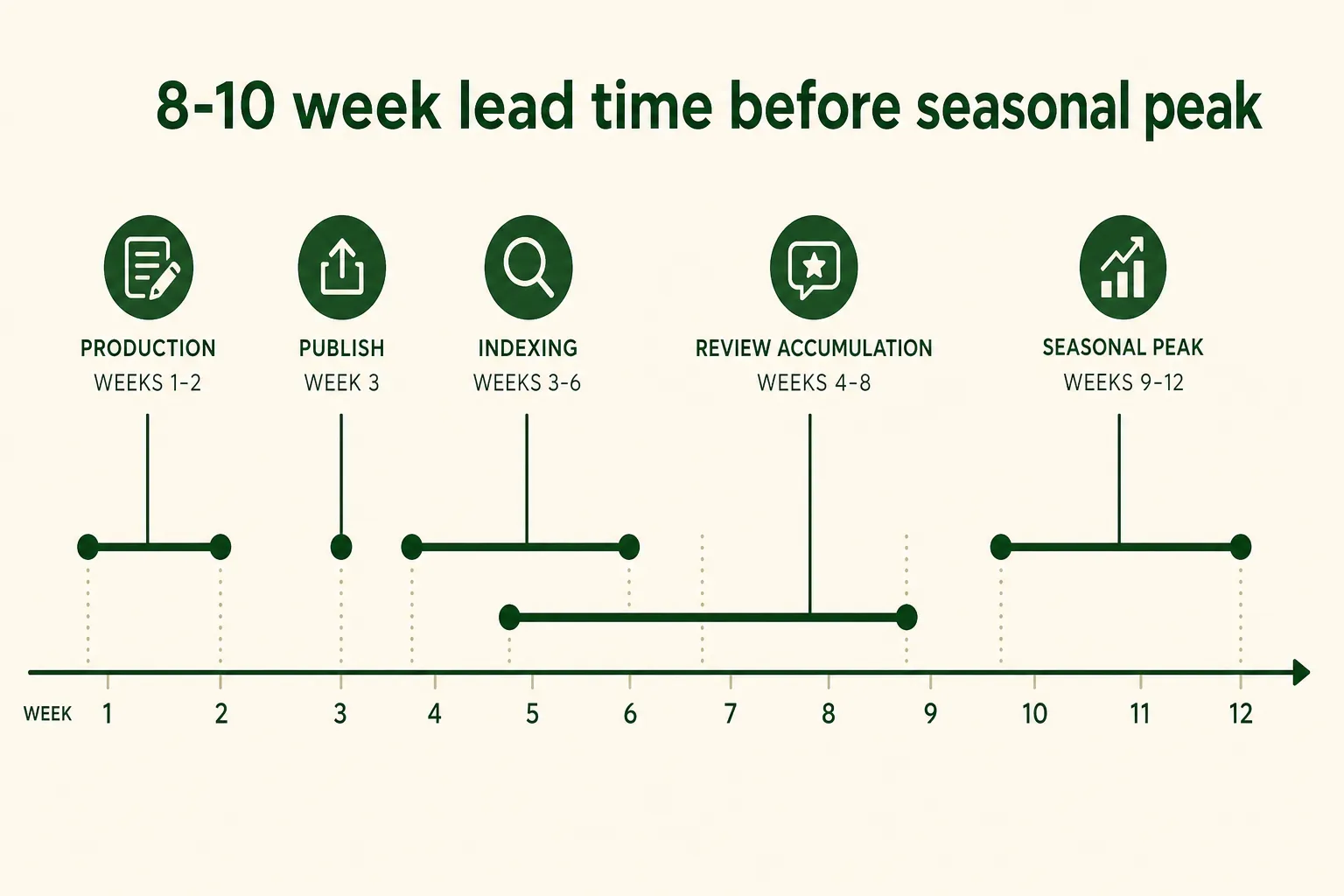
This process typically takes 4-6 weeks minimum. For a seasonal title to rank competitively when seasonal search traffic peaks, you need to be indexed and reviewed 6-8 weeks before the peak. Add 1-2 weeks for production time, and your minimum lead time is 8-10 weeks before the seasonal peak.
Many publishers aim for 12 weeks early as a safe buffer, especially for Q4 titles where competition for ranking is highest.
The Full Seasonal Calendar
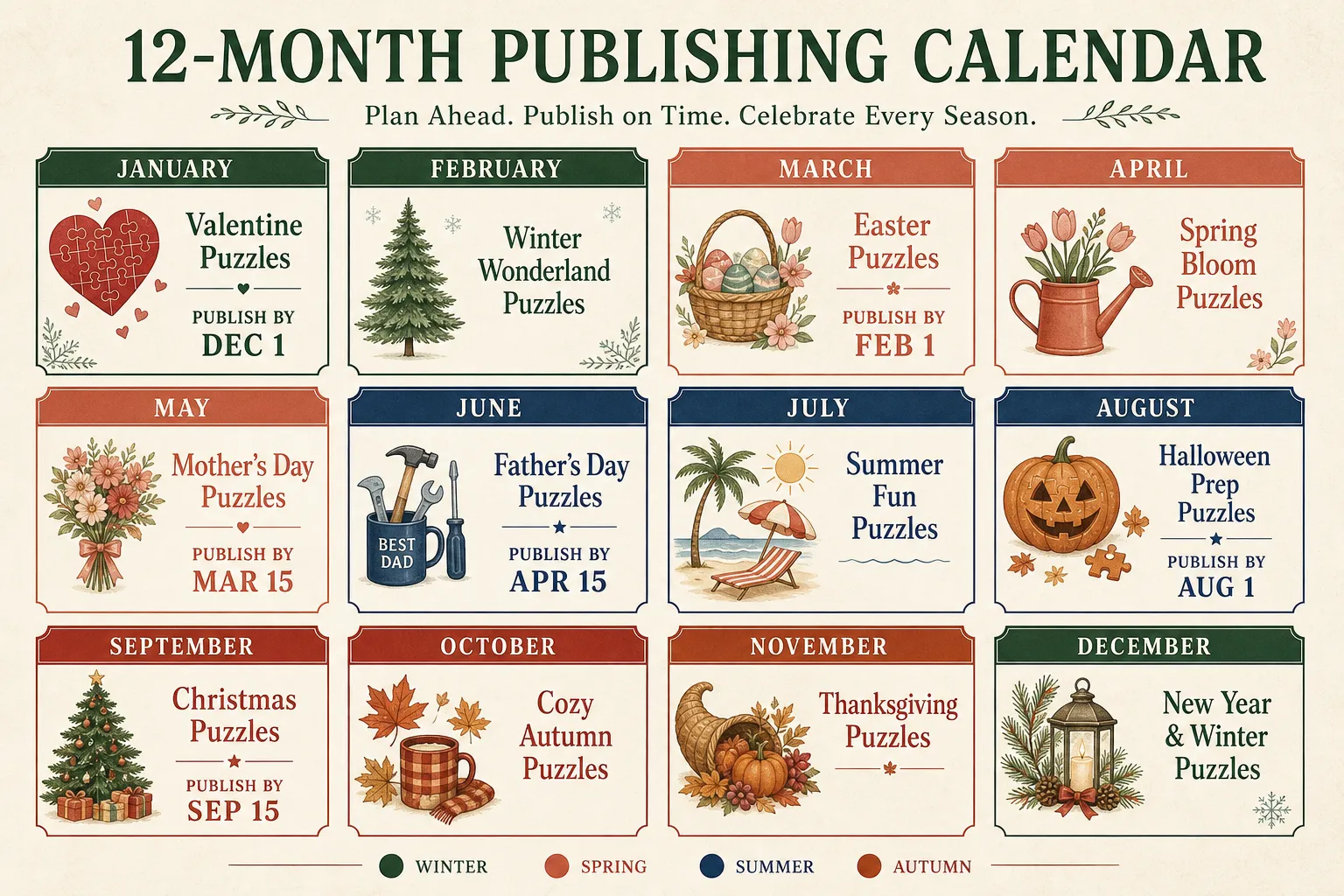
Below is a month-by-month framework for puzzle book publishers. "Publish by" dates are the latest recommended publish dates to reach organic ranking before the seasonal peak.
January-February: Valentine's Day + Winter Activity
Target peak: February 1-14 (Valentine's Day)
Publish by: December 1
Book types:
- Valentine's word search (love, romance, relationships themes)
- Couples activity books (mixed puzzles for two)
- Winter and snow-themed puzzle books (general)
- "New Year, New Brain", fresh start positioning (evergreen angle in January)
Search terms to target: "valentines day word search", "couples activity book", "love word search book"
March-April: Easter + Spring
Target peak: 2-3 weeks before Easter Sunday (variable date, typically late March-April)
Publish by: February 1
Book types:
- Easter word search (eggs, spring, Biblical Easter vocabulary)
- Spring nature puzzle books (flowers, birds returning, gardening)
- Activity books for kids during spring break
Search terms to target: "easter word search book", "spring activity book", "easter puzzle book for kids"
May: Mother's Day
Target peak: First 2 weeks of May
Publish by: March 15
Book types:
- "Gift for Mom" word search or crossword
- Garden and flower-themed puzzle books (strong Mother's Day gift angle)
- Relaxation/cozy-themed adult puzzle books (gift positioning)
Search terms to target: "mothers day puzzle book gift", "word search gift for mom", "gift for grandma puzzle book"
June: Father's Day + Summer
Target peak: First 2 weeks of June (Father's Day); June-August for summer titles
Publish by: April 15 (Father's Day titles); May 1 (summer titles)
Book types:
- Sports-themed puzzle books (golf, fishing, football, baseball)
- "Gift for Dad" crossword or sudoku
- Summer activity books for kids
- Travel-themed puzzle books (for the road or beach)
Search terms to target: "puzzle book gift for dad", "golf word search book", "travel activity book"
August-September: Back to School + Halloween Preparation
Target peak: August 15-September 30 (back to school); October (Halloween)
Publish by: July 1 (back to school); August 1 (Halloween)
Book types:
- Educational word search and crossword for kids
- Vocabulary-building puzzle books for students
- Halloween word search, maze books, activity books
- Spooky/horror themed puzzle books for adults
Search terms to target: "halloween word search book", "kids halloween activity book", "back to school activity book"
October: Halloween Peak + Early Christmas Prep
Target peak: October 1-31 (Halloween); November-December (Christmas)
Publish by: August 15 (Halloween final push); September 1 (Christmas books)
Book types:
- Halloween final titles
- Christmas word search (the largest single seasonal puzzle book market)
- Christmas crossword puzzles
- Holiday maze books for kids
- "Gift for [specific recipient]" Christmas positioning
Search terms to target: "christmas word search book", "christmas crossword puzzles", "holiday activity book"
November-December: Christmas Peak + New Year
Target peak: November 15 - December 20 (Christmas gift buying peak)
Publish by: September 15 (for Christmas organic ranking); October 1 (absolute latest)
Book types:
- Christmas/holiday books (publishing now means little, you're already late for Christmas)
- New Year activity books (publish in October for January rankings)
- Winter cozy/home-themed puzzle books (broader than just Christmas)
Key insight: If you haven't published your Christmas titles by October, you are too late for organic ranking. Focus Q4 energy on:
- Running Amazon Ads on existing Christmas titles from previous years
- Lowering the price on existing Christmas titles during the gift window
- Preparing Q1 titles (Valentine's Day, spring) for early January publication
Evergreen Publishing: The Year-Round Revenue Foundation
Seasonal titles create spikes. Evergreen titles create the floor. Your evergreen publishing calendar should produce at least 2 new titles per month, regardless of season.
Best months for launching new evergreen titles:
January: Post-holiday buyers are looking for productive new habits. "Daily Sudoku" and "Brain Games for Adults" messaging aligns with New Year motivation.
September: Back-to-school energy extends to adult learners and routine-seekers. Strong launch month for adult puzzle titles.
Any month: Evergreen titles with strong keyword optimization and a good launch strategy can gain traction year-round. The seasonality effect on evergreen titles is modest (10-20% BSR variation) compared to seasonal titles (200-500% variance).
Evergreen launch cadence: For a publisher building a catalog, 2 new evergreen titles per month = 24 titles per year. At 18 months, you have a portfolio of 30-36 titles that generate compounding baseline revenue even during slow seasons.
The Holiday Ladder Strategy
For your highest-potential seasonal categories (Christmas above all others), use a "ladder" approach across years:
Year 1. Establish:
Publish 2-3 Christmas puzzle titles in September. Collect initial reviews. Even if they arrive too late for the full December peak, they establish your catalog position for Year 2.
Year 2. Optimize:
Your Year 1 Christmas titles now have reviews and sales history. In September, run Sponsored Products ads on them. Update descriptions and A+ Content. Publish 2-3 new Christmas variations. Year 2 Christmas revenue is typically 3-5× Year 1.
Year 3. Amplify:
Your catalog now has 5-8 Christmas titles, all with established review counts and sales history. Organic ranking holds through the season without heavy ad spend. Seasonal income compounds each year.
Using RodBooks KDP Calendar
RodBooks KDP Calendar maps your planned titles against a seasonal demand calendar, shows you lead times for each theme, and helps you schedule production so you never miss a publishing window.
Plan your publishing calendar →
Frequently Asked Questions
How early is too early to publish a seasonal book?
6 months early is too early, your book may lose algorithmic momentum between publication and the peak. 8-12 weeks before the peak is the optimal window. In this period, the algorithm is indexing and ranking you while search volume is still building.
Can I re-release the same seasonal book every year?
Not the exact same book (duplicate content issues). However, you can update your existing seasonal titles (add new puzzles, refresh the cover) and re-publish them, or publish a new volume each year. Your Year 1 title retains its reviews and history; Year 2 is a new volume that cross-sells with it.
Is Christmas the only season worth targeting?
Christmas has the highest volume by far, but other seasons can be very profitable with less competition. Halloween, Mother's Day, and Valentine's Day consistently outperform expectations for puzzle book publishers who publish early enough. The ratio of competition to demand is often better outside Q4.
Should I use Amazon Ads for seasonal titles?
Yes, especially in the 4-6 weeks leading up to the seasonal peak when search volume is rising. Set up Sponsored Products campaigns for your seasonal titles in September (for Christmas) or July (for Halloween) so you have bid data before the peak. Increase budgets as the season approaches.
Seasonal Publishing Checklist
- Annual calendar built with all major seasonal peaks marked
- "Publish by" dates calculated (8-10 weeks before each peak)
- Production time accounted for (add 1-2 weeks before publish date)
- Evergreen title cadence set (target 2/month alongside seasonal production)
- Christmas titles scheduled for September publication
- Halloween titles scheduled for August publication
- Mother's Day / Father's Day titles scheduled for March/April
- Year 1 seasonal titles identified for Year 2 update or series continuation