How to Market Your KDP Book (Puzzle Publisher Hub)
Overview of marketing Amazon KDP puzzle books: listing-first launch, free Kindle timing, and deep links to Amazon Ads and TikTok playbooks plus RodBooks tools.
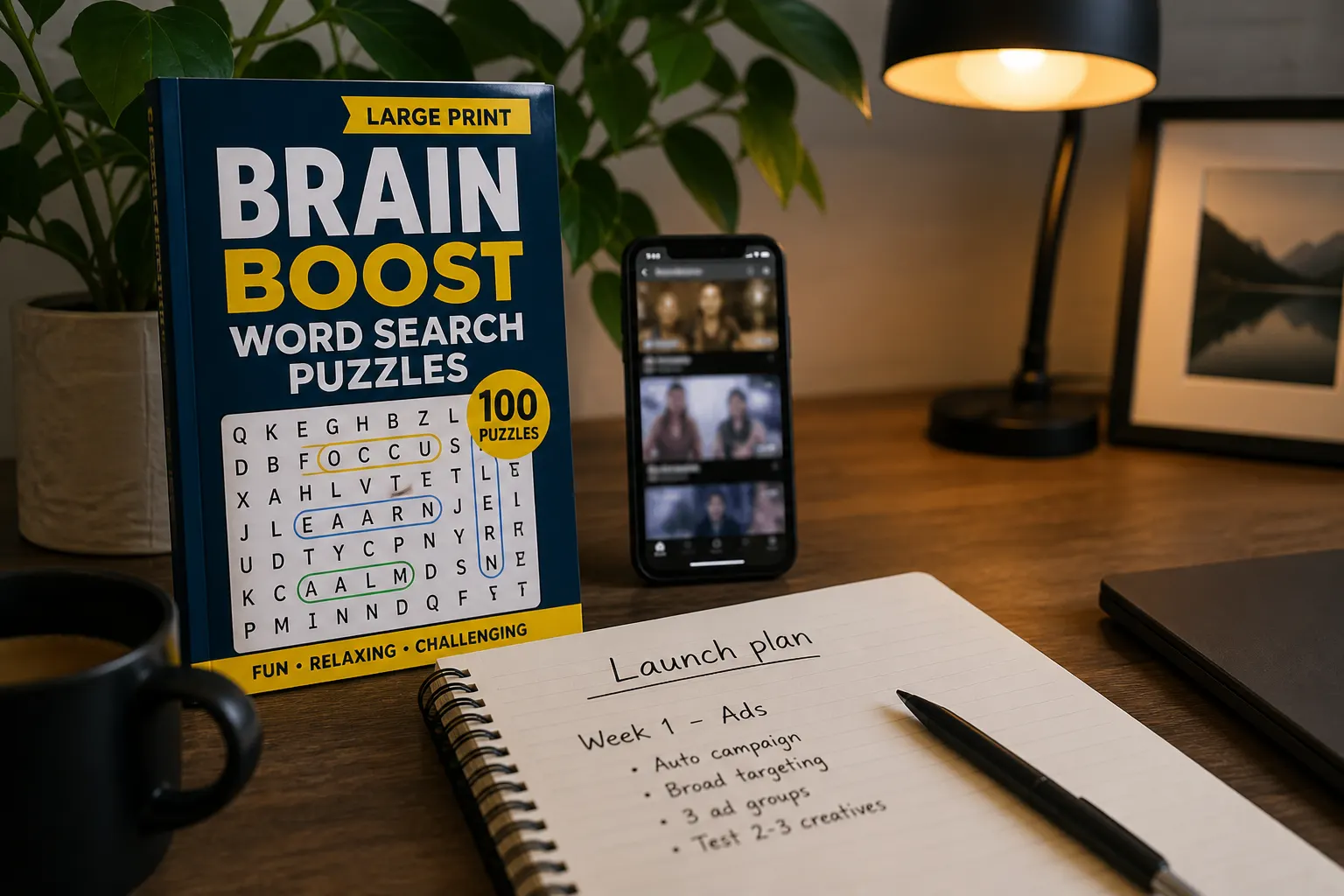
A live listing is not a launch plan. Publishers searching how to market a newly published free Kindle book or how to increase sales on Amazon usually need a sequence: a readable listing, a few honest reviews over time, then traffic you can measure. This playbook is for KDP paperbacks and Kindle editions, including free Kindle promotions, without pretending one viral post replaces metadata.
Marketing multiplies what the product already is. If the cover hides the puzzle type, the description never states puzzle count, or the price ignores print cost, ads and TikTok only accelerate refunds and bad reviews. Fix the storefront first, then open one traffic source you can turn off.
See also: listing copy that converts clicks, series launch sequencing, and pre-launch production workflow.
Fix the listing before you buy traffic
Ads and TikTok cannot rescue a cover that hides the puzzle type, a title that does not match the interior, or a description that never says who the book is for. Tighten title, subtitle, categories, and backend keywords first. Then market the same promise everywhere.
Use KDP keyword research and backend keywords so ads and organic search share language. For placement rules, read KDP keyword best practices. Write the Amazon search phrase you want to win on a single line before you film or bid. If the listing title, ad headline, and TikTok caption disagree, you train three different shopper stories.
Check look-inside quality on phone and desktop. Puzzle shoppers decide in seconds whether grids look crisp and whether solutions exist. A+ Content should reinforce the same puzzle type and audience, build modules in the A+ Content tool after the cover is final, not from an old mockup.
How to market a newly published free Kindle book
Free Kindle promotions (KDP Select free days) can create rank and mailing-list signups. They do not automatically create paperback sales. Treat free as a traffic event:
- Confirm the Kindle file matches the print promise (same puzzle count story, honest samples).
- Schedule free days after the listing is complete, not the hour you click publish.
- Tell people where to go: Amazon search phrase, series name, or a short link you control.
- Have a next step: Volume 2, a paid Kindle price after the promo, or the paperback.
- Do not buy fake reviews or run giveaway schemes that violate Amazon rules.
If the book is paperback-only, skip “free Kindle” tactics and spend energy on look-inside quality, categories, and a small ads test instead. A newly published free Kindle book can introduce a series, but it trains shoppers to expect $0.00, pair free days with a clear paid follow-up and announce the end date.
Amazon Ads as the on-ramp
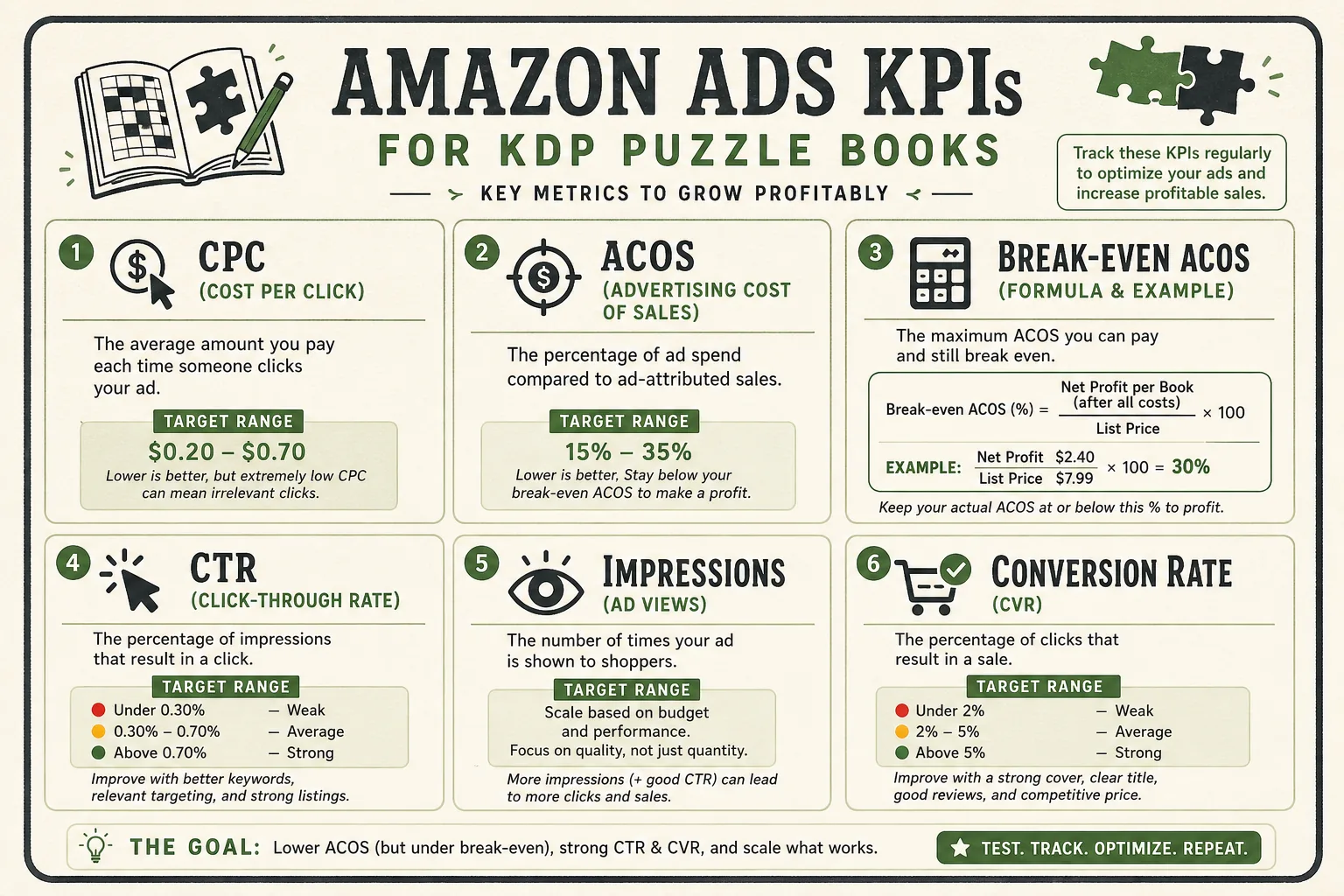
Sponsored Products work when the listing already converts and you know break-even ACOS from real royalties. Build a keyword and bid plan in the Amazon Ads for KDP tool, then launch a small exact-match test before you scale. Start with the phrases already in your title and backend fields so relevance is high on day one.
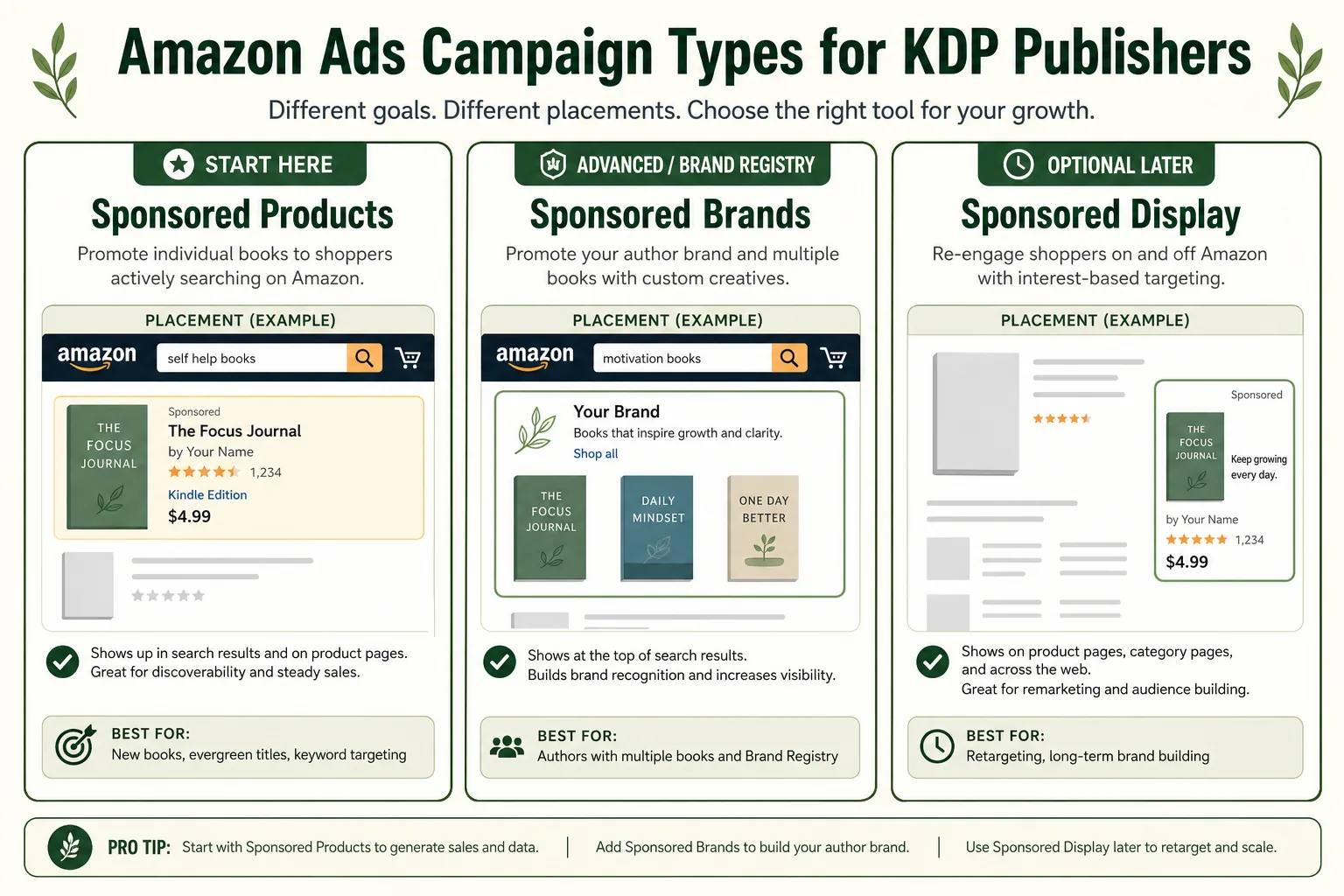
Separate campaigns by match type when you can: exact for proven converters, phrase for controlled discovery, and a tightly capped auto campaign only if you will harvest search terms weekly. Do not dump the entire budget into auto and hope. For a 30-day beginner structure, see Amazon Ads for low-content puzzle books.
Read the search term report every week
Marketing without a search term review is guessing. Download the report, sort by spend and orders, and classify each term: keep, negative, or promote to exact. Irrelevant kids or coloring clicks on an adult crossword are not “awareness”, they are wasted royalty.
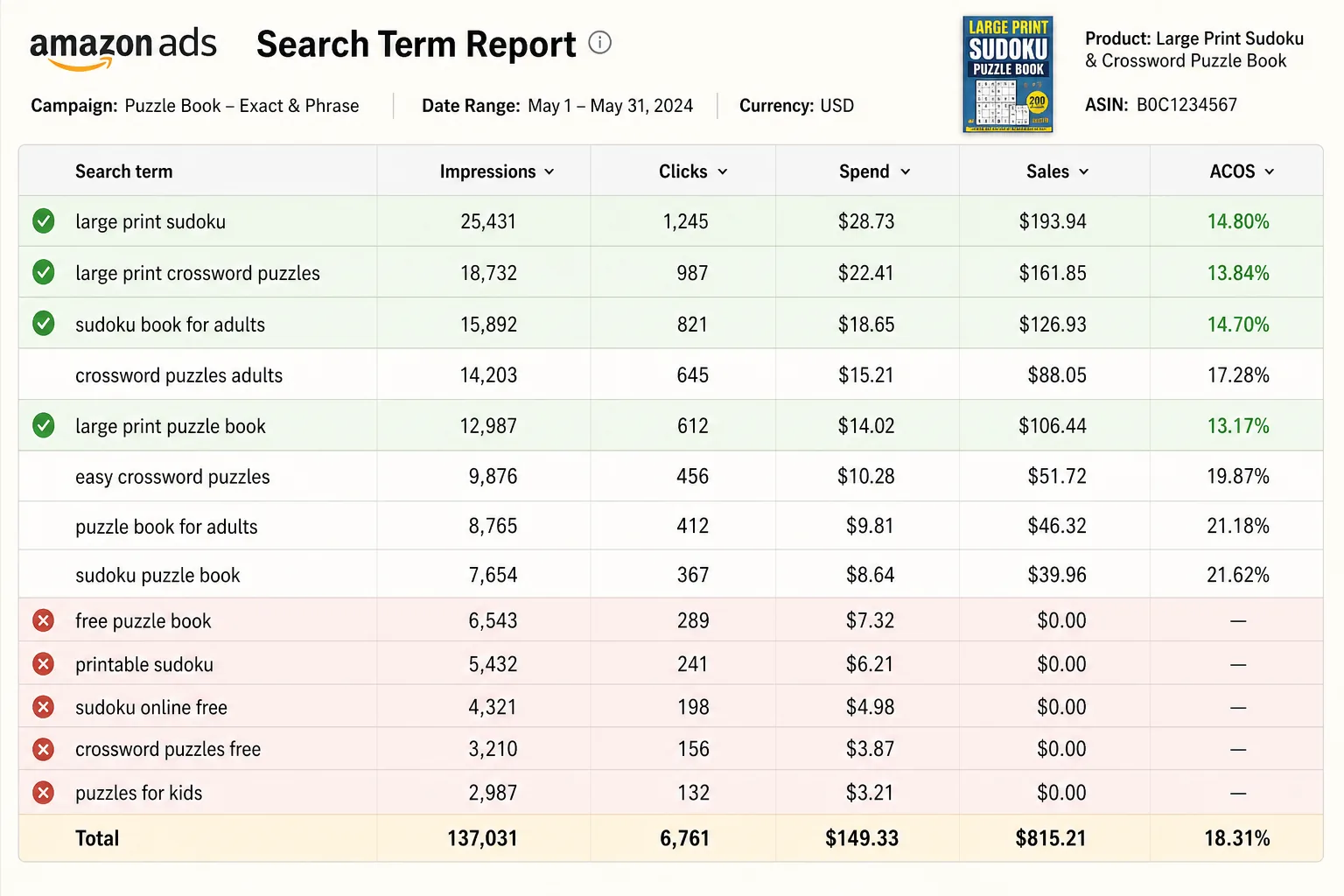
How to increase sales on Amazon is mostly subtraction of wasted traffic plus a clearer product. If ads spend $20 to make a $3 royalty, the listing or the targeting is wrong. Pause, fix the sample, then restart at a lower cap. Track units, ACOS, and sessions, not vanity impressions.
TikTok as the creative on-ramp
Puzzle books show well on video: page flips, large-print close-ups, “satisfy the grid” clips. Use the TikTok marketing tool for hooks, hashtags, and a four-week calendar. Film the real interior. Do not advertise a lifestyle that the paperback does not deliver. Point every video at one clear Amazon search phrase or short link.
Consistency beats virality for catalogs. Three honest demos that match the cover outperform one trendy audio that attracts the wrong age group. For creative angles and posting cadence, see TikTok marketing for KDP puzzle books.
Plan the launch week on a calendar
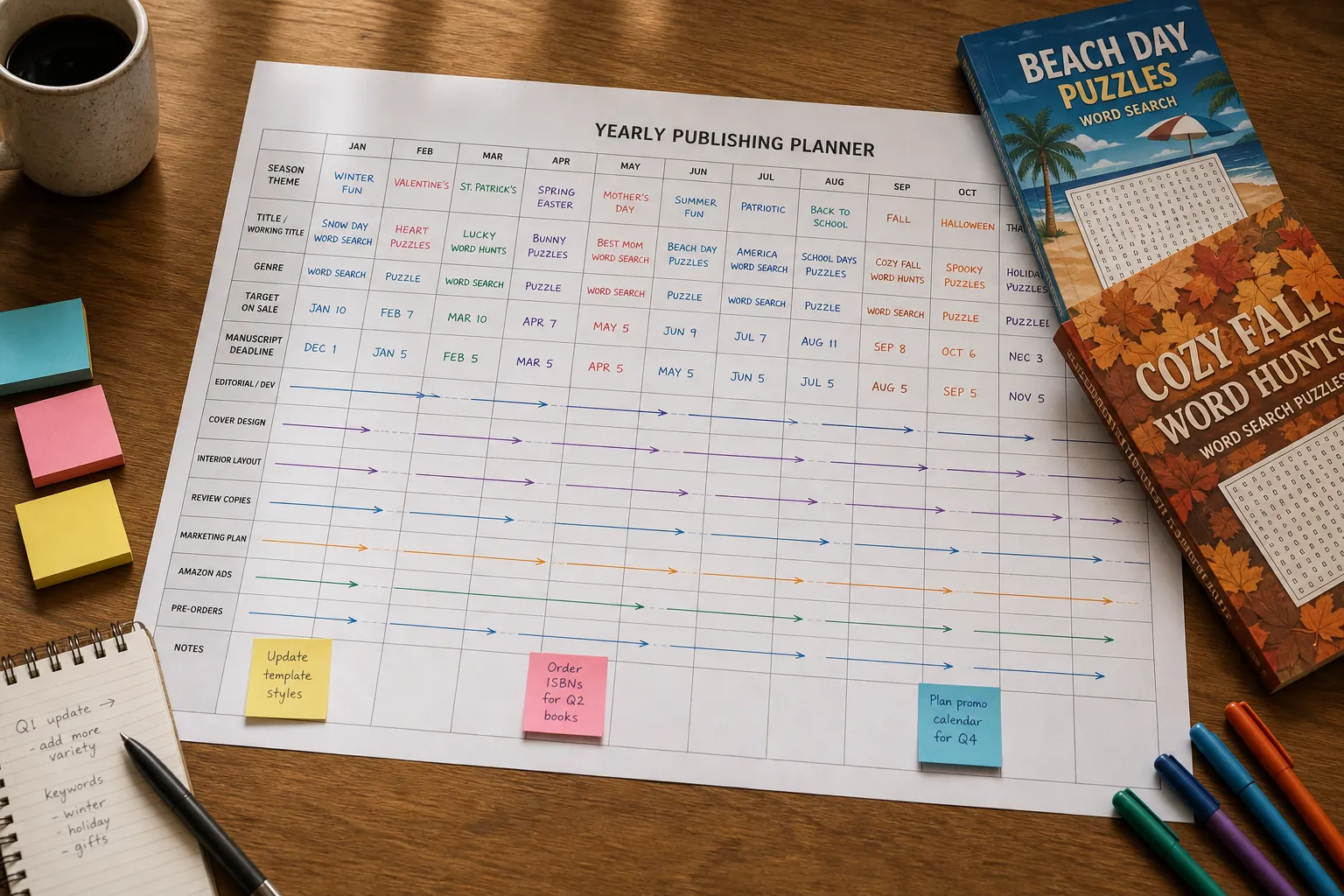
Scattershot posting is why launches feel chaotic. Put free days, ad start date, creative publish dates, and “search term review” on one timeline. Use the KDP calendar so seasonal titles are not marketed after the peak week has already passed.
A 14-day launch outline
- Days 1-2: proof the look-inside, categories, keywords, price, and A+.
- Days 3-5: 10-20 exact-match Amazon Ads with a hard daily cap.
- Days 6-10: three TikToks that show the physical book and a clear Amazon CTA.
- Days 11-14: kill wasted ad terms, boost the one creative that holds retention, and note which search terms converted.
- Day 14+: schedule Volume 2 production if the niche is series-shaped, catalogs compound.
What not to do when you want to boost sales
- Do not buy fake reviews, manipulated ratings, or click farms. Amazon closes accounts for that.
- Do not run a free Kindle promo on a file that is incomplete or mislabeled. Refunds and poor reviews follow.
- Do not point TikTok at a listing whose cover does not match the video.
- Do not scale Amazon Ads on auto-only with no negatives. You will pay for irrelevant clicks.
- Do not wait six months to publish Volume 2 if the niche is series-shaped.
If you are not in KDP Select, you cannot run Amazon free days on Kindle. Price promotions and ads still work. Do not invent a “free Kindle” campaign you cannot deliver. Organic communities and honest demos still need a converting page, free traffic does not excuse a weak cover.
Budget math before you scale spend
Know your royalty per unit before you raise bids. A paperback that nets a few dollars cannot sustain a high ACOS forever. Set a daily cap you can afford to lose while you learn, then raise spend only on exact terms that produce orders at an acceptable ACOS. If CTR is healthy but conversion is poor, fix the listing, do not “fix” conversion with higher bids.
Split test one variable at a time: new main image crop for ads, or a clearer subtitle, or a tighter negative list. Changing cover, price, and bid strategy on the same day makes the search term report unreadable. Write down the change and the date in the same calendar you use for free days and creative posts.
Email, communities, and catalog compounding
If you collect emails during a free promo, send a single honest follow-up: where to find Volume 2, when the free window ends, and what the paperback includes that the Kindle sample does not. Do not drip spam. Niche Facebook groups, teacher forums, and hobby communities can work when self-promo is allowed and your post shows the real interior, not stock photos of someone else’s book.
The strongest “marketing system” for puzzle KDP is still the next related title. Two or three volumes that share branding, keywords, and A+ comparison modules outperform one lonely ASIN with a large ad budget. Schedule the next interior in RodBooks while Volume 1 ads are still collecting search terms, so launch week for Volume 2 reuses the phrases that already converted.
Revisit seasonality quarterly. A Halloween maze book marketed in March burns trust. Use the calendar tool to place creative and ads in the weeks when shoppers actually search the theme, then pause campaigns when the season ends instead of letting auto targeting wander into irrelevant queries.
Measurement cadence that keeps you honest
Pick a weekly ritual: export search terms, note sessions vs orders in KDP reports, and write one sentence about what you will change next. Without that cadence, marketing becomes vibes and invoice shock. If a channel cannot be measured even roughly, cap the time you spend on it until the listing converts on Amazon traffic alone.
When you expand to a second marketplace, repeat the listing audit before you copy the US ad structure. Keywords, categories, and price elasticity differ. A creative that worked on TikTok for US shoppers may still need a localized caption and a marketplace-specific short link. Keep the same product promise; do not paste a US-only backend keyword set blindly into every store. Pause underperforming campaigns instead of “hoping seasonality” will rescue a weak listing.
Frequently asked questions
Will a free Kindle book boost my paperback?
Sometimes, if readers love the content and the series is obvious. Often it only moves Kindle rank. Track paperback BSR separately during free days.
How do I boost sales on Amazon if I have no budget?
Improve the listing, publish a second related title, and post honest demos in communities where self-promo is allowed. Free traffic still needs a converting page.
Should I run ads on day one?
Only after the cover, sample, and price are defensible. Ads accelerate a listing that already makes sense. They do not invent demand for a confusing product.
Is TikTok required?
No. It is one creative channel. If you will not film consistently, put the same hours into Amazon Ads tests or the next book.
Start publishing free: create a RodBooks account, then open Amazon Ads and TikTok marketing from the same studio when the listing is ready for traffic.