Puzzle Book Solutions Pages: What KDP Buyers Expect
Puzzle book solutions pages for KDP: placement, size, numbering, and how answer keys prevent the review complaints that kill rankings.
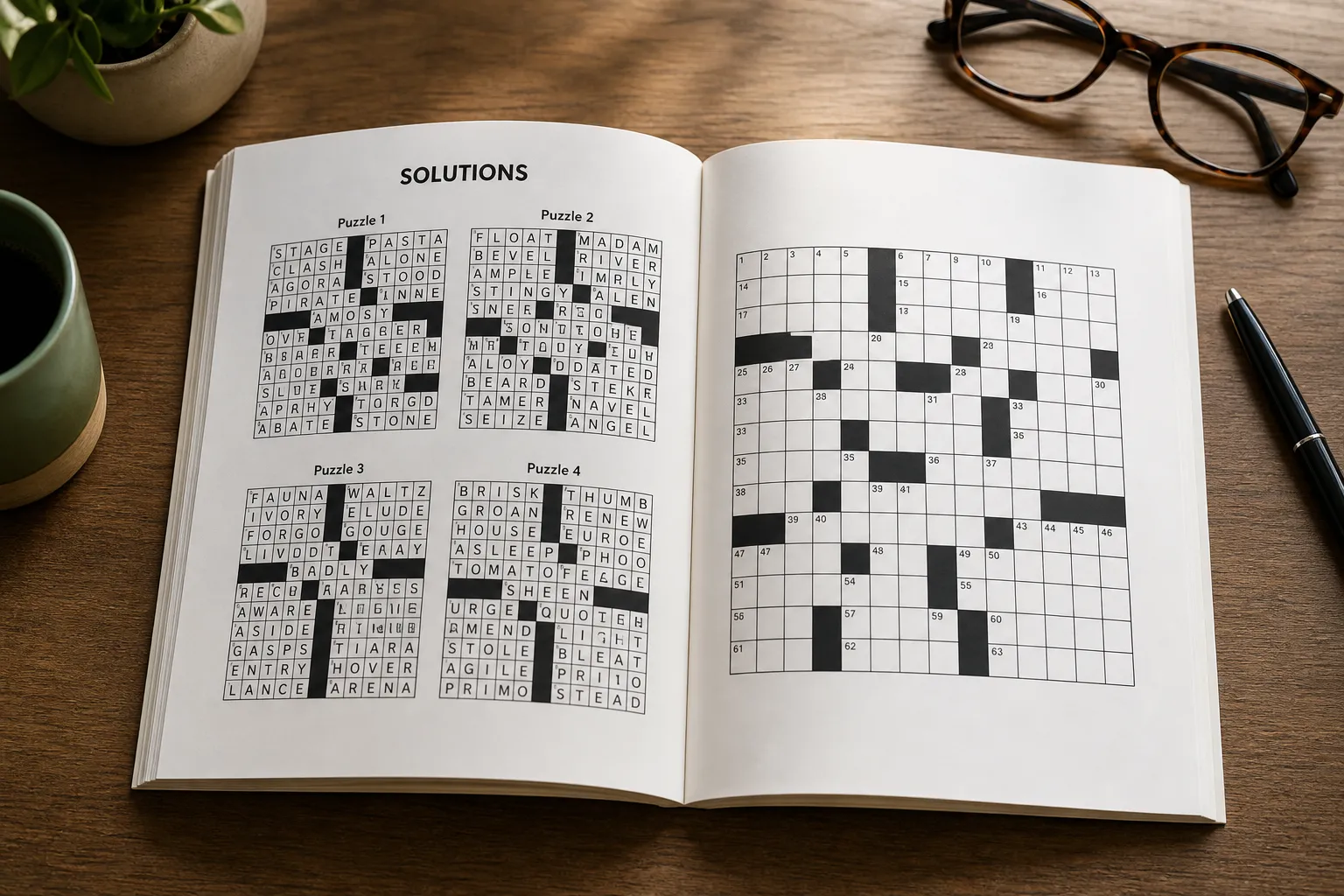
Puzzle book solutions pages on KDP are not optional fluff. Buyers expect readable answer keys that match puzzle numbers. Bad solutions trigger returns and 1-star reviews. Plan page count with how many puzzles a KDP puzzle book should have, then export matching keys from your generator.
The solution section is the most neglected part of most KDP puzzle books, and the most frequently cited source of negative reviews.
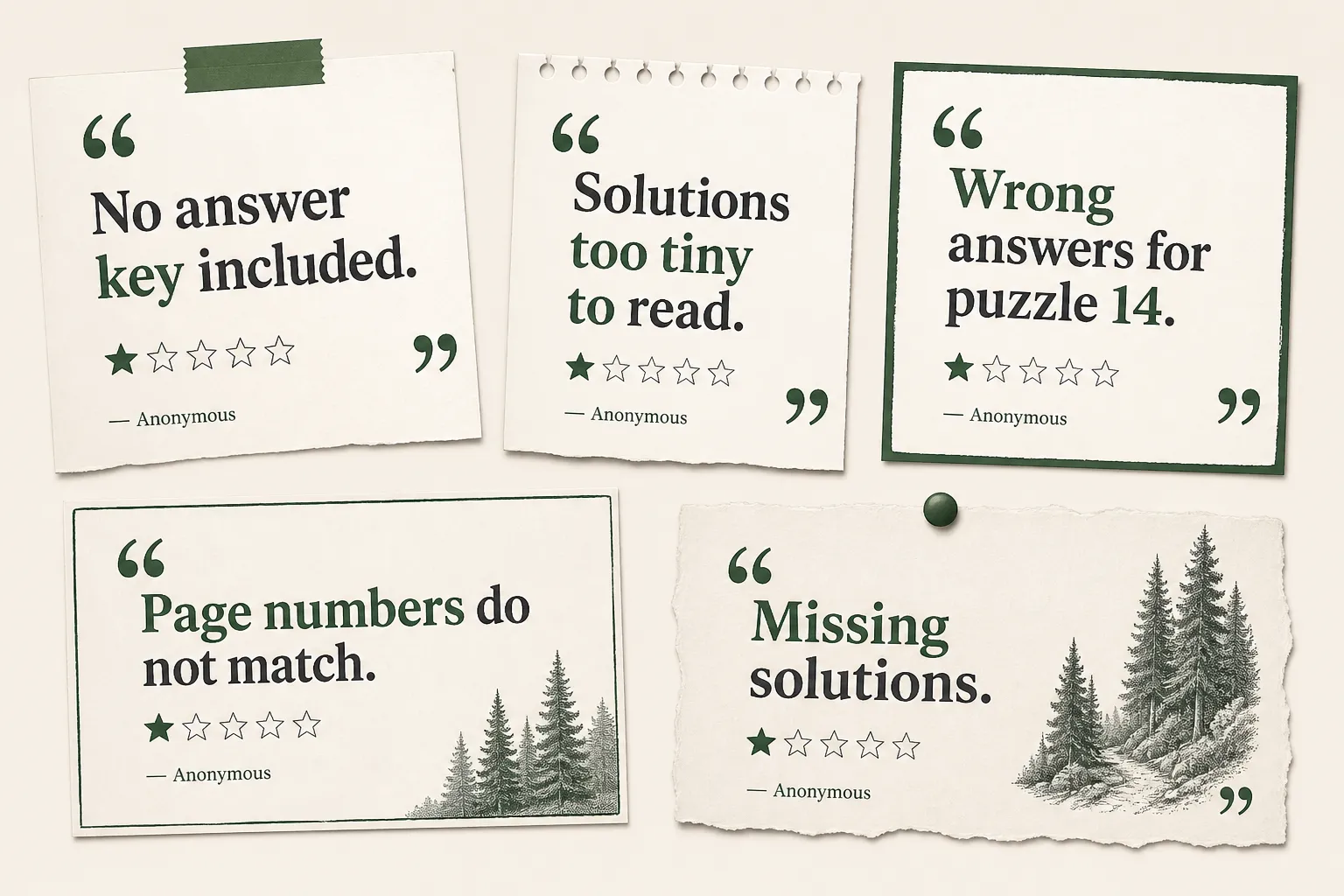
"No answer key included." "Solutions too small to read." "Page numbers in the solutions don't match the puzzles." "The solution for puzzle 14 doesn't match what I solved." These complaints appear across thousands of puzzle book reviews on Amazon, and they are entirely preventable.
A well-designed solution section does not just satisfy buyers who are stuck, it signals to all buyers, before they purchase, that the publisher cares about quality. When a buyer clicks "Look Inside" and reaches the solutions pages, what they see tells them whether the book was made carefully or slapped together.
This guide covers everything: the psychology of solution sections, format standards by puzzle type, exact layout recommendations, common mistakes and how to avoid them, and how to configure your solution section when using a book generator.
See also: best KDP trim sizes for puzzle books, word search publishing workflow, and bleed settings for solution pages.
Why Solution Sections Matter More Than Publishers Realize
The "Look Inside" effect. Amazon's Look Inside feature shows buyers a sample of the book's pages, typically the front matter and the first 10-15% of content. For puzzle books with solution sections at the back, buyers often scroll directly to the solutions to check quality. A cramped, illegible, or absent solution section sends buyers away before they purchase.
The review-generating function. Buyers who successfully complete puzzles and find their answers confirmed in a clear solution section leave better reviews. Buyers who struggle to find or read solutions, or find errors, leave negative reviews that disproportionately damage your book's ranking.
Trust and credibility signal. A professionally formatted solution section communicates that the puzzle author cared about the entire reading experience, not just the puzzle generation phase. This matters particularly in niches where quality is uneven (most of KDP's puzzle categories).
The stuck-solver rescue. Even experienced solvers get stuck occasionally. A solution section that rescues them from a single frustrating puzzle transforms that experience into a positive one. Without a solution, frustration compounds and generates a return or review.
The Three Non-Negotiable Standards
Before covering format details, establish three baseline requirements for every puzzle book you publish:
1. Every puzzle must have a solution.
No exceptions. A puzzle book with 80 puzzles must have 80 solutions. Omitting solutions for "bonus" puzzles, final challenges, or space reasons is never acceptable to buyers. If you cannot include a solution for a puzzle, do not include the puzzle.
2. Every solution must be correct.
This sounds obvious, but it is the most common source of 1-star reviews. A solution page with wrong answers, whether from generation errors, formatting misalignment, or numbering mistakes, is catastrophic for your reviews. Spot-check a random sample of 5-10% of solutions against their puzzles before publishing. If using a generator, verify the export logic produces matching solution pages.
3. Solution page numbers must match puzzle page numbers.
If puzzle #14 is on page 47, and the solution section says "Puzzle 14, page 47" or simply "Puzzle 14" (in sequential order), the reference must be clear and accurate. Mismatched numbering is the third most common solution complaint after absence and illegibility.
Solution Format Standards by Puzzle Type
Different puzzle types have different solution conventions. Here is what buyers expect from each.
Crossword Solution Pages
Format: The solution for a crossword is typically shown as a fully filled-in grid with all black squares intact and all answer letters clearly visible.
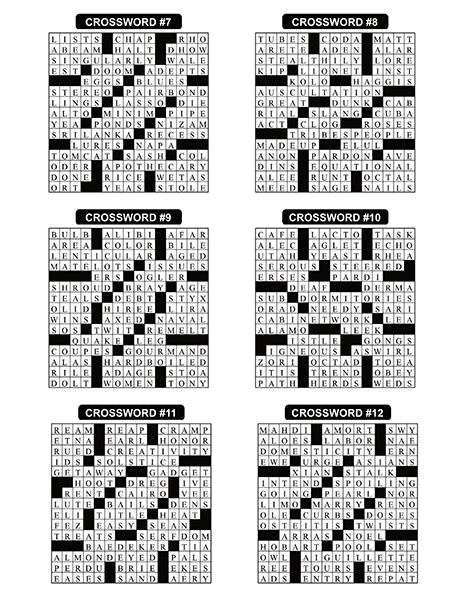
Size: A crossword solution must be large enough to read the individual letters. At 6x9 trim, one full-size crossword solution per page is standard and expected, the same size as the original puzzle.
Compact option: Some publishers show crossword solutions at a reduced size, 2 per page, to save pages and print cost. This is acceptable IF the reduced grid is still clearly legible (letters should be at least 8pt). Going smaller than 2 per page on a standard crossword is not advisable.
Clue verification note: Some high-end crossword books include a brief note with the solution confirming any tricky clue references. This adds value for solvers who want to understand why an answer was correct.
Layout on page: Solution grids should be labeled with the puzzle number and optionally the puzzle title/theme. Numbering must match the main puzzle section exactly.
Sudoku Solution Pages
Format: The solution for a sudoku is a fully filled-in 9x9 grid with the given clue numbers shown (typically in bold or a different weight) and the solved numbers shown normally.
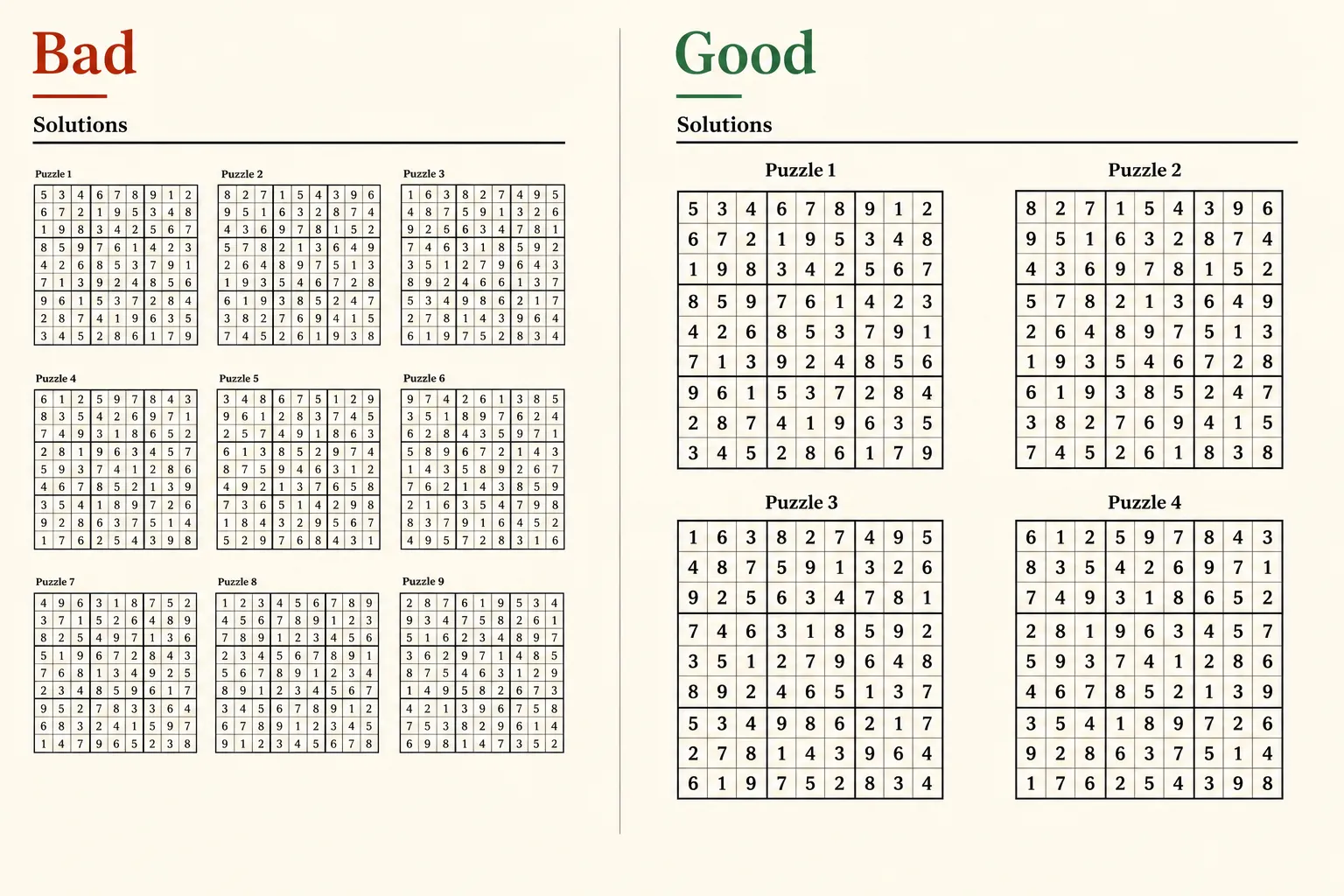
Compact per-page: Sudoku solutions are smaller than crossword solutions. 4-6 solutions per page is the standard and expected range. This is the "sweet spot", more than 6 becomes illegible; fewer than 4 wastes pages and increases print cost.
Size check: At 4 solutions per page on 6x9, each solution grid is approximately 2.5 x 2.5 inches. Letters and numbers at this size should be at least 7-8pt. Test by printing one solution page at home.
For large-print senior editions: Reduce to 2-4 solutions per page. The accessibility standard extends to the solution section, not just the puzzle pages.
Word Search Solution Pages
Format: Word search solutions show the grid with the hidden words highlighted, circled, or marked. The most common approach: show the original grid with the word paths clearly marked (each word outlined or in a different shade).
Alternative format: Some publishers show a simple text list of each word with its grid coordinates (e.g., "ROBIN. Row 3, Col 5, diagonal NE"). This takes less space but is less intuitive for buyers.
Preferred format: The full highlighted grid is overwhelmingly preferred by buyers. It mirrors the solving experience and is visually satisfying to look at. A text-coordinate list is acceptable as a secondary reference but should not replace the visual solution.
Size: 1-4 word search solutions per page depending on grid size. A full 20x20 word search solution grid needs most of a page to remain legible. A compact 12x12 solution can fit 2 per page comfortably.
Maze Solution Pages
Format: The solved maze showing the correct path marked clearly from start to finish, typically as a bold or colored line through the maze.
Size: Full-page adult mazes should have full-page solutions (one per page). Kids' smaller mazes can fit 2-4 per page.
Path clarity: The solution path must be unambiguous, a thick line, a distinct color (if printing in color, or a clearly visible dark marker if B&W), and it must trace the complete path from entrance to exit with no gaps.
Solution Section Placement and Page Architecture
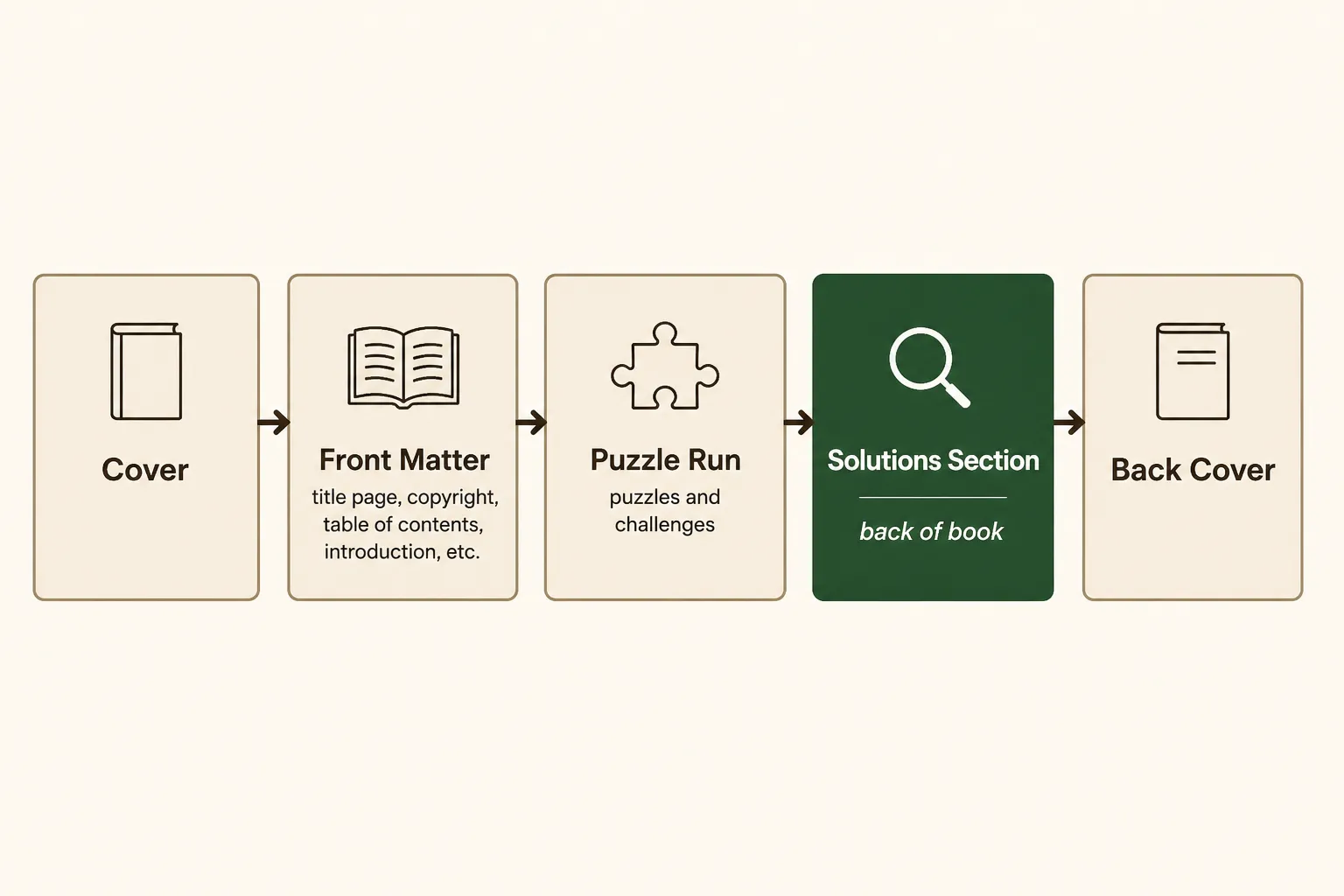
Always place solutions at the back of the book. Solutions at the front or middle disrupt the puzzle flow and expose answers before buyers choose to look. Back-of-book solutions are the universal convention.
Recommended solution section structure:
[Puzzle Section Ends]

--- Solutions ---

[Section title page: "Solutions" or "Answer Key"]
[Solutions in puzzle order: Puzzle 1, Puzzle 2, etc.]
[Numbered to match the main puzzle numbering exactly]
Section title page: Start the solutions section with a dedicated title page ("Answer Key" or "Solutions"). This creates a clear visual break and helps buyers navigate directly to solutions from the back of the book.
Running headers or footers in solutions: Include the puzzle number range on each solutions page (e.g., "Solutions: Puzzles 1-6" in a page footer). This helps buyers find specific solutions quickly.
No solutions in-line with puzzles: Placing a small solution grid immediately after each puzzle (at the bottom of the same page or on the reverse) is a common beginner mistake. It defeats the purpose of a challenge entirely, the solution is visible while solving.
Common Solution Section Mistakes and How to Fix Them
Mistake 1: Solutions too small to read *Symptom:* You tried to fit too many solutions per page to save print cost. *Fix:* Use the format standards above. Reduce to 4 per page for sudoku, 2 for crossword, 1-2 for full-page word search. Accept the additional pages; they are worth more in royalty protection than the print cost saving.
Mistake 2: Solutions don't match puzzle numbers *Symptom:* The puzzle section was reordered or pages were added after the solution section was generated. *Fix:* Always regenerate your solution section after any change to the puzzle run. Never manually edit puzzle numbering after the solution export, regenerate the complete book.
Mistake 3: No solution section label *Symptom:* The solutions section begins without any heading or title page, making it hard to navigate to. *Fix:* Add a dedicated "Solutions" or "Answer Key" page as the first page of the solutions section. This is standard in traditionally published puzzle books.
Mistake 4: Incorrect solutions *Symptom:* One or more solution grids do not match their corresponding puzzle, numbers are wrong, words are missing, paths are incorrect. *Fix:* This usually indicates a generator error or a manual editing mistake. Spot-check 10% of solution-puzzle pairs before every export. If using a generator, verify it produces validated solution exports (not just visual approximations).
Mistake 5: Solutions included in the "Look Inside" preview *Symptom:* Amazon's "Look Inside" shows the first 10% of the book, which may include the solution section if it was placed too early or if the book is short. *Fix:* Keep your solution section at the back, and ensure your book is long enough that the 10% Look Inside window does not reach the solutions. If needed, add additional front matter or an introduction to push solutions further back.
How RodBooks Handles Solution Generation
When you build a puzzle book with RodBooks, solutions are generated alongside puzzles automatically, not as an afterthought.
In Step 2 (Book settings), you configure:
- Solutions per page: 4, 6, or 9 (for sudoku/compact formats)
- Solution section title: Customize the header text
- Solution page positioning: Always end-of-book
In Step 4 (Compile and export), the final PDF includes the complete solutions section in order, matching the puzzle run exactly.
The solution configuration is reflected in the Step 3 live preview, so you can verify solution page count and layout before downloading the final PDF.
Configure your solution section in RodBooks →
Frequently Asked Questions
Are solutions required for KDP puzzle books?
KDP does not technically require solutions, but Amazon's content guidelines state that books must deliver on their stated promise. More practically, missing solutions are one of the most common reasons buyers return puzzle books and leave 1-star reviews. Including a complete, accurate solution section is effectively required for commercial viability.
Should my solution section be at the front or back?
Always at the back. Solutions at the front or middle of a book expose answers to buyers who flip through before buying or before starting. Back-of-book solutions are the universal industry convention for all puzzle types.
How many sudoku solutions should I fit per page?
4-6 per page is the standard. For large-print or senior editions, reduce to 2-4. Never go above 9 per page, at that density, individual grid numbers become too small for comfortable reading, especially after solving fatigue.
What if my puzzles take up two pages each? Do solutions take two pages too?
No. Solutions are almost always more compact than the puzzle itself because the solution only needs to show the filled grid, not the full clue layout. A two-page crossword (puzzle on one page, overflow clues on the next) will have a one-page solution showing just the filled grid.
Can I skip solutions for "bonus" or "expert" puzzles at the end of a book?
No. Every puzzle needs a solution. Including any puzzle without a corresponding solution in the answer key will generate complaints. If a puzzle is so hard that solutions feel inappropriate, add a note in the introduction explaining the challenge, but still include the solution.
Does the solution format affect my KDP review ratings?
Directly and measurably. The most common 1, 2, and 3-star reviews for puzzle books cite solution problems: absent, illegible, or incorrect. Publishers who invest in a clean, complete, correctly sized solution section consistently outperform those who treat solutions as an afterthought.
Solution Section Checklist
- Every puzzle has a matching solution (puzzle count = solution count)
- All solutions have been verified correct, spot-checked 5-10% manually
- Solution page numbers align with puzzle numbering exactly
- Solutions are legibly sized (not smaller than 7-8pt for compact grids)
- Solutions section has a clear title page ("Solutions" or "Answer Key")
- Solutions are placed at the back of the book
- Running header or footer labels solution page ranges
- Solution section does not appear in the KDP "Look Inside" preview window
- Large-print editions use reduced density (max 4 per page for sudoku)
- For word search: highlighted/marked grid format used, not coordinate list only