How to Create Crossword Puzzle Books for Amazon KDP (Step-by-Step)
Create crossword puzzle books for Amazon KDP: themes, clues, grids, interiors, covers, and listing tips that convert.
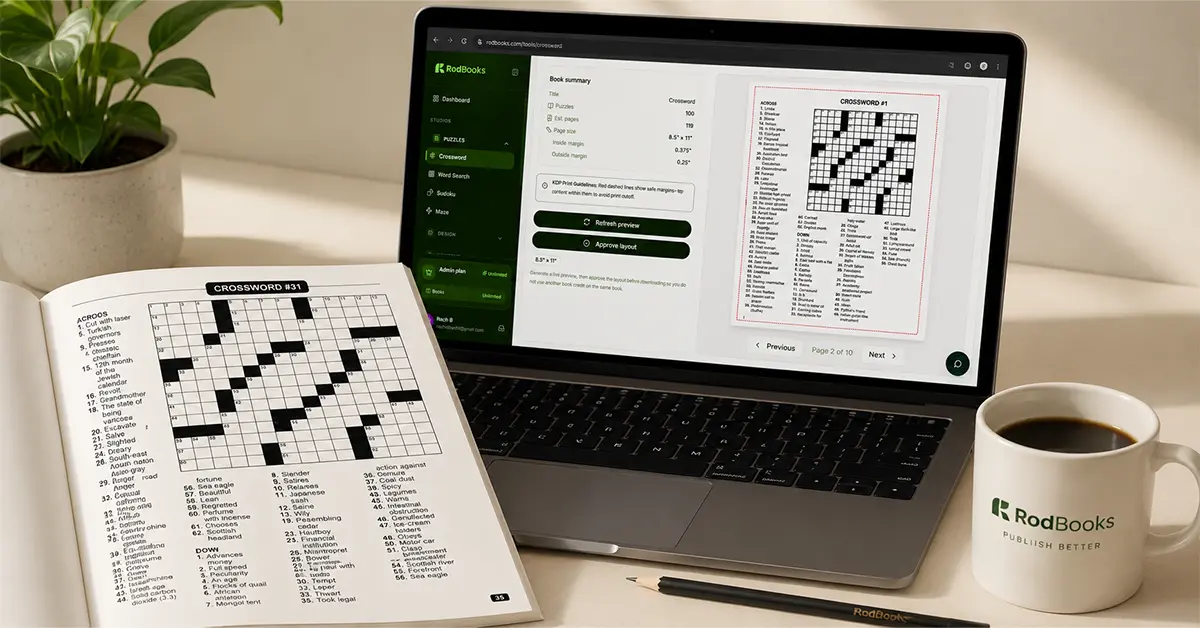
Crossword puzzle books are one of the most consistently purchased low-content niches on Amazon KDP. Adults, seniors, students, and themed-gift shoppers search for them year-round. They return steady royalties, require no ISBN-based literary marketing, and, once you have a reliable production workflow, can be assembled and listed in a single afternoon.
This guide walks you through the entire process: picking a profitable sub-niche, creating print-ready crossword puzzles, assembling a complete interior, designing a cover, and optimizing your KDP listing. Every step is practical and tool-backed.
See also: crossword word list themes, crossword count and page math, and crossword answer key layout.
Why Crossword Puzzle Books Still Sell on Amazon KDP
Before writing a single clue, it pays to understand why the category stays healthy.
Buyers are habitual. Crossword solvers tend to buy in series. Once they finish a volume, they look for the next. A recognizable cover system and consistent difficulty labeling builds a loyal buyer.
Evergreen demand across age groups. "Crossword for seniors large print" and "crossword for adults hard" rank at dramatically different difficulty levels but share the same production infrastructure. One workflow can serve multiple sub-niches.
Gifting searches spike year-round. "Crossword gift book", "crossword stocking stuffer", and "crossword book for mom" all surface in Amazon search and Google. Seasonal hooks give you calendar opportunities without starting from scratch.
Print-only format protects margin. Unlike Kindle, a printed crossword book cannot be pirated or read on a device for free. Every reader needs a physical copy, which keeps your royalty per sale stable.
Step 1: Choose the Right Sub-Niche
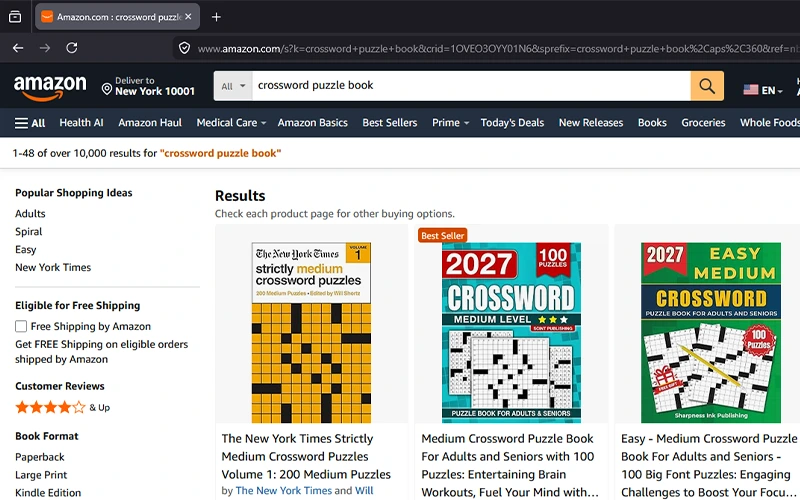
The broadest keyword, "crossword puzzle book", is too competitive for a new KDP publisher. Find a narrower position where the search intent is specific but the competition is not yet saturated.
Proven sub-niches to research:
- Large-print crosswords for seniors: high conversion, lower competition than standard adult.
- Themed crosswords: travel, history, Bible, movies, food, pop culture, animals. Themes command premium cover design and slightly higher perceived value.
- Easy / beginner crosswords: targets new solvers. Clue writing is simpler and complaints about unfair difficulty are fewer.
- Expert American crosswords: harder to write but appreciated by serious solvers who pay more and review more generously.
- Crosswords for kids / educational: vocabulary-building angle; strong gift and teacher purchase signal.
Research tools to use:
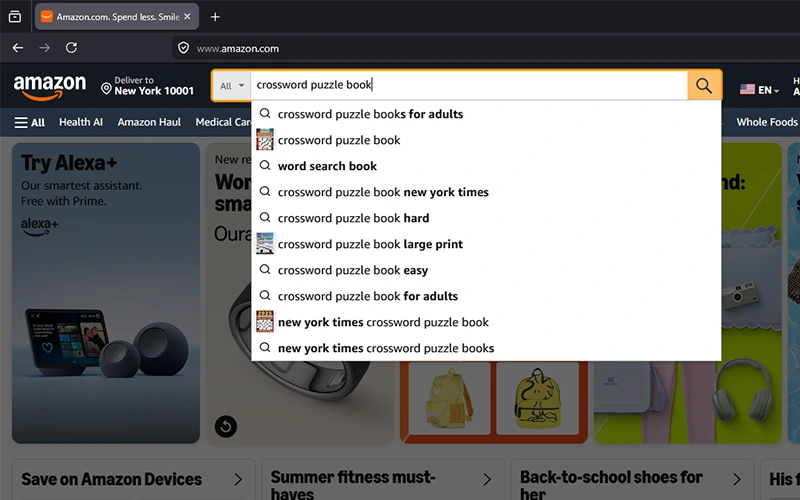
Open Amazon and type "crossword puzzle book", look for niches that appear in auto-complete suggestions with lower review counts on the first-page results.
Check Best Seller Rank (BSR) on titles in the sub-niche you are considering. A BSR under 100,000 in Books means at least a few sales per day.
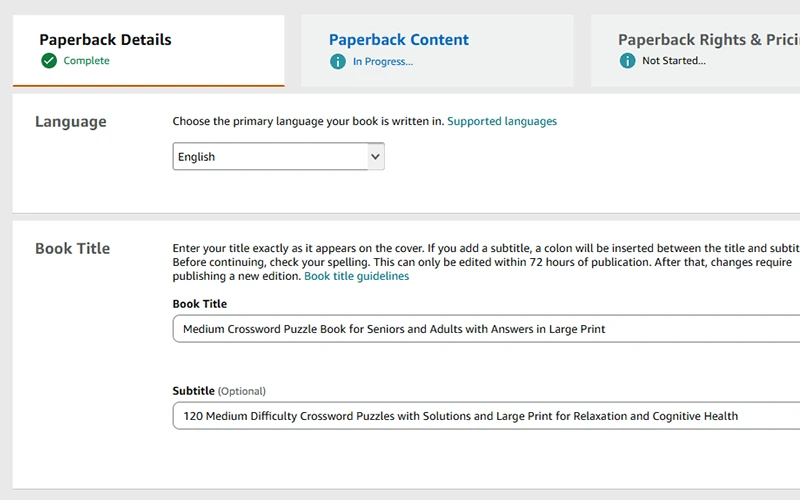
Study competitor titles for recurring title formulas: difficulty + audience + volume number is the most common pattern ("Medium Crossword Puzzles for Adults. Vol. 3").
Step 2: Create Your Crossword Puzzles
This is where most beginners either stall or waste months building puzzles manually. There are three approaches:
Option A: Build Puzzles Manually (Not Recommended at Scale)
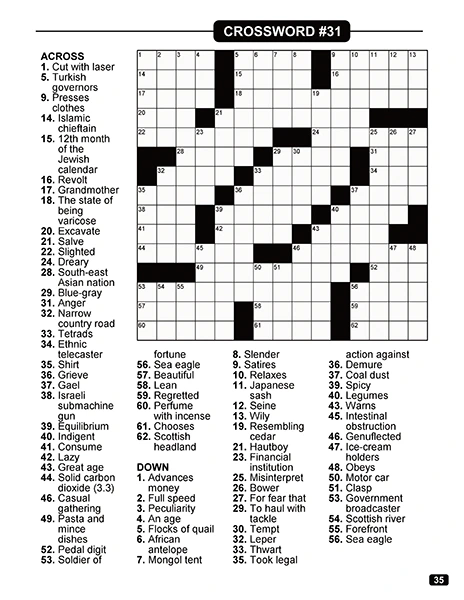
You can design crosswords in spreadsheet programs or in word-processor tables. This is practical for one or two puzzles but breaks down immediately when you need 50 to 150 puzzles for a full book. Manual grid construction also produces inconsistent crossing patterns that experienced solvers notice.
Option B: Use a Dedicated KDP Puzzle Generator
A purpose-built KDP crossword generator handles the structural logic (legal crossings, balanced black-square density, symmetric patterns) and exports print-ready output. This is the right approach for anyone publishing at volume.
RodBooks Crossword Generator supports two core puzzle styles:
- Standard (American and British templates): classic symmetric grid structure, correct crossing patterns, consistent black-square density. Best for adult, senior, and general interest books.
- Freeform generation: looser grid shape, four difficulty levels (Easy through Expert). Better for themed or educational books where the word list drives the puzzle rather than the template.
Both styles produce numbered Across and Down clues automatically alongside matching solution pages.
How to Set Up the Crossword Studio in RodBooks
The four-step workflow maps directly to the decisions you need to make:
Step 1: Choose your puzzle format. Select Standard (American or British grid template) or Freeform. Set the grid size (15×15 is standard for adult books; 13×13 or smaller works for easy/beginner editions). Pick a difficulty level for Freeform puzzles.
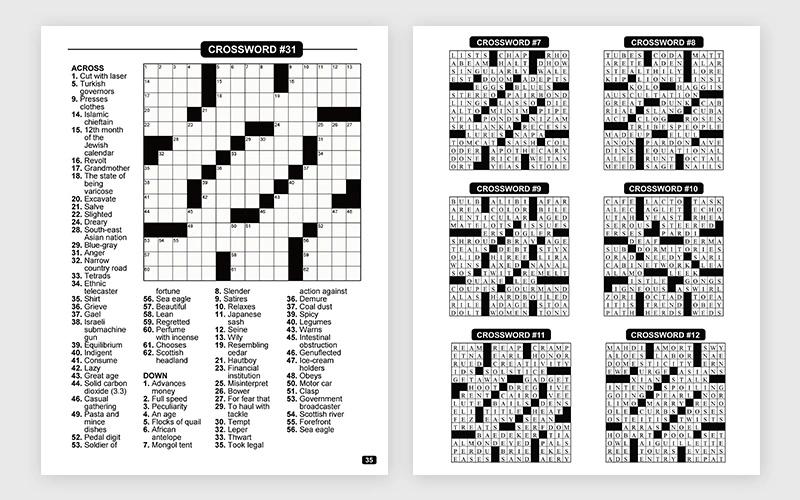
Step 2: Configure the book system. This is where you define the publishing parameters: trim size (6×9 in or 8.5×11 in), typography settings, clue column layout, page number style, solution density (4, 6, or 9 solutions per page), and the total puzzle count for the volume.
Step 3: Preview the real pages. Before any export, you inspect the live page layout, puzzle grid, clue region, pagination, and solution pages, as they will appear in print. This catches layout problems before you upload to KDP.
Step 4: Compile the KDP interior. Add front matter (title page, copyright, optional introduction and table of contents), run the full puzzle set, append the answer key section, and download one print-ready PDF.
Step 3: Structure Your Book Interior
A well-structured crossword book interior does three things: it validates your book with Amazon's content guidelines, it signals professionalism to buyers, and it makes your answer key easy to find. Here is the standard interior structure:
Section | Notes |
|---|---|
Title page | Book title, subtitle, edition/volume, author/brand name |
Copyright page | Year, publisher name, "All rights reserved" notice |
Introduction (optional) | Brief note on how to use the book, difficulty scale |
Table of contents (optional) | Puzzle numbers and page references |
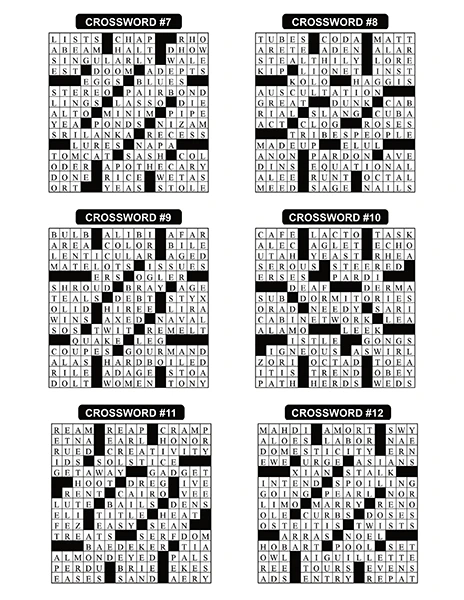
Puzzle run | All puzzles numbered sequentially |
Answer key | Compact grids, 4-9 per page, titled "Solutions" |
Puzzle count guidelines by trim size:
- 6×9 in: 50-80 puzzles is comfortable for a 200-page book.
- 8.5×11 in: 80-120 puzzles fits well in a similar page count. The larger trim is preferred for seniors and for "mega" volume positioning.
KDP has a minimum page requirement. A book with fewer than ~24 pages may not pass review. Even small volumes should have front matter and a proper answer section to reach a healthy page count.
Step 4: Design Your Crossword Book Cover
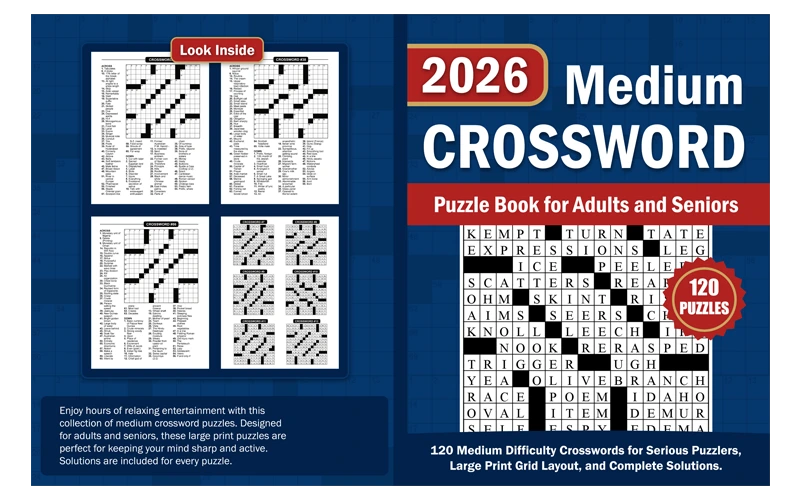
Your cover is your primary sales tool. Amazon displays covers at thumbnail size in search results. A cover that reads clearly at 90 × 120 pixels outperforms a detailed but unreadable design.
Cover design essentials for crossword books:
- Large, high-contrast title text. Readers need to see the title in one glance. Use a weight-800 or heavier typeface, at least 60-70% of the cover width.
- Clear difficulty and audience signal. "Easy", "Hard", "For Seniors", "Large Print" should appear in secondary text, not buried in the subtitle.
- Crossword-themed visual. A partial grid pattern, filled-in squares, or a stylized crossword icon reinforces the product category immediately.
- Volume number. If this is a series (which it should be), make the volume number visible. Series buyers scan for the next volume.
- Spine-ready layout. If your book is 100+ pages, the spine is visible on Amazon product pages. Include the title and author name in the spine.
KDP cover specifications (paperback):
- Full-wrap cover PDF required (front + spine + back in one file).
- Spine width is calculated by Amazon based on page count and paper type (white or cream).
- Bleed area: 0.125 in on all outside edges.
- Safe zone: keep all critical text 0.25 in from the edge.
Step 5: Format and Upload to KDP
With your interior PDF and cover PDF ready, log in to kdp.amazon.com and start a new paperback title.
Interior upload checklist:
PDF is flattened (no editable layers)
Fonts are embedded
Page size matches the trim you selected (6×9 or 8.5×11, no bleed required for interiors)
Page count is even (add a blank page at the end if needed)
Margins meet KDP minimums (0.25 in outside, 0.375 in gutter for books up to 150 pages)
After upload, run KDP's built-in previewer. The previewer shows exactly how your file will print. Check:
Grid lines are sharp and unbroken
Clue columns do not overflow
Page numbers are consistent
Solution pages are aligned
No orphaned clue numbers between pages
Step 6: Optimize Your KDP Listing
A production-perfect book still needs a discoverable listing. Crossword puzzle books live and die on Amazon search.
Title Formula
Use this pattern: [Adjective] Crossword Puzzles [for Audience], [Volume Number]: [Benefit or Theme]
Examples:
- Large Print Crossword Puzzles for Seniors, Vol. 1: 80 Easy-to-Read Puzzles with Solutions
- Hard Crossword Puzzle Book for Adults, Vol. 2: 100 American-Style Challenges
- Travel-Themed Crossword Book, 75 Puzzles About World Destinations
Subtitle and Backend Keywords
The subtitle is indexed by Amazon's search algorithm. Include your primary keyword naturally: "crossword puzzle book for adults", your difficulty level, and your trim size if relevant.
Backend keyword slots (up to 7 entries, 50 characters each) should cover:
- Alternate spellings and UK variants ("crossword puzzle" / "crossword")
- Audience phrases not in your title ("gift for dad", "brain games adults")
- Thematic overlaps ("word game book", "activity book adults")
Book Description
Use Amazon's A+ formatting: short bold lead sentence, bullet list of features (puzzle count, difficulty, trim size, solution key), and a closing paragraph with a soft CTA to "look inside."
KDP Categories
You need two categories. Use:
Books > Humor & Entertainment > Word Games > Crossword Puzzles (primary)
Books > Crafts, Hobbies & Home > Crafts & Hobbies > Puzzles (secondary)
Niche categories (request via Author Central) may include "Large-Print Crossword Puzzles" or "Activity Books" depending on your sub-niche.
Step 7: Price, Launch, and Iterate
Pricing guidelines for crossword paperbacks:
6×9 in, 50-80 puzzles: $6.99-$9.99 (standard range)
8.5×11 in, 100-150 puzzles: $9.99-$14.99 (large-format premium)
Themed or gift-oriented: Can push to $12.99-$16.99 with the right cover
Set your price to yield 60% royalty rate at $2.99 minimum. For most crossword books, $9.99 is the sweet spot that covers expanded distribution and keeps royalty above $3.50 per sale.
Launch approach:
Publish with A+ Content enabled (available to all KDP publishers, takes 24-48 hours to appear).
Request 5-10 honest reviews from early readers or your email list.
Run a short Amazon Ads Sponsored Products campaign targeting exact-match keywords ("crossword puzzle book for adults") at $5-$10/day during the first 30 days to collect sales history.
Series strategy:
Once Volume 1 is ranked and earning, publish Volume 2 within 60 days. A series listing consolidates reviews, increases cross-sell visibility, and keeps you on the same search page when buyers look for "Vol. 2."
Common Mistakes to Avoid
Using copy-pasted or public-domain puzzles. Amazon scans for duplicate content. Build original puzzles every time.
Poor solution page design. Solutions stuffed at the end with tiny unreadable grids are a common 1-star review driver. Use 4-6 compact but readable solutions per page.
Ignoring trim-size margins. KDP rejects files with text or grid lines in the bleed area. Always check margins in KDP's previewer before publishing.
Launching a single volume. One book has almost no series momentum. Plan at least 3 volumes before publishing Volume 1.
Generic cover designs. Crossword books with plain, templated covers are buried under hundreds of similar listings. Invest in a differentiated cover design system across your series.
How RodBooks Simplifies the Entire Workflow
Every step above, puzzle generation, interior assembly, layout preview, PDF export, is handled inside a single platform built specifically for Amazon KDP publishers.
RodBooks Crossword Generator replaces the manual-to-tool-to-formatter chain with one connected studio:
Generate Standard (American / British) or Freeform puzzles
Set trim size, clue layout, pagination, and solution density
Preview the actual print pages before export
Compile front matter, full puzzle run, and answer key into one PDF
Download a file that opens cleanly in KDP's Previewer
You can create a free account and test the crossword workflow without a credit card. Monthly book and puzzle limits scale with your plan.
Start generating your crossword book →
Frequently Asked Questions
Do I need any design experience to create a crossword puzzle book for KDP?
No. A purpose-built generator like RodBooks handles grid construction, clue formatting, page layout, and PDF export automatically. You supply the theme and word list; the tool handles the technical production.
How many puzzles should a crossword book have?
Most well-reviewed crossword books on Amazon contain 50-120 puzzles. Large-print senior editions often run 50-70 puzzles at larger grid size. Hard difficulty books aimed at experienced solvers can run 75-100 puzzles. The key factor is that every puzzle should be solvable, complete, and matched to your stated difficulty level.
Can I publish a crossword book without an ISBN?
Yes. KDP assigns a free ASIN for your paperback. You can also request a free KDP ISBN. You do not need to purchase a third-party ISBN for a KDP paperback, though purchasing your own ISBN gives you more distribution control.
What trim sizes work best for crossword puzzle books?
6×9 in is the standard trade paperback size and appears professionally comparable to traditionally published puzzle books. 8.5×11 in is larger, better for seniors or "mega" volume positioning, and typically commands a higher list price. Both are supported by KDP's print program.
How do I make sure my crossword book ranks on Amazon?
Keyword-optimized title and subtitle, well-researched backend keywords, A+ Content enabled, a competitive price, and a series of at least 3 volumes are the primary ranking factors. Launching a Sponsored Products campaign in the first 30 days accelerates the initial sales velocity Amazon needs to rank your title organically.
Is it legal to sell crossword puzzle books on Amazon KDP?
Yes, as long as all puzzles are original (not copied from published books or licensed sources) and your book does not infringe on any trademarks in its title, cover, or content. Always write original clues, even for well-known answers.
Final Checklist Before Publishing
Sub-niche researched and validated with Amazon BSR data
Puzzle count confirmed for chosen trim size
All puzzles generated and individually reviewed in live preview
Interior PDF exported and opened in KDP Previewer, no errors
Cover PDF created with correct spine width for final page count
Title follows the difficulty + audience + volume formula
Subtitle contains primary keyword
7 backend keyword slots filled
2 categories selected
Price set for 60% royalty rate
A+ Content module scheduled for activation after publish
Volume 2 production started
Ready to start? Open the RodBooks Crossword Generator →